African Buffalo
The African Buffalo, also known as the Cape Buffalo, is one of the most formidable and powerful animals on the African continent. Often considered one of the "big five" game animals, it is known for its unpredictable and aggressive nature.
They are highly social animals that live in large, structured herds, sometimes numbering in the thousands. This herding behavior is their primary defense against predators like lions.
The African Buffalo has a distinctive set of horns that are fused at the base, creating a bony shield known as a "boss." This boss is used for defense and for establishing dominance within the herd.
Their diet consists mainly of grasses, and their constant grazing helps shape the landscape and promote new plant growth. They are a vital part of the African ecosystem, but they are not to be underestimated.
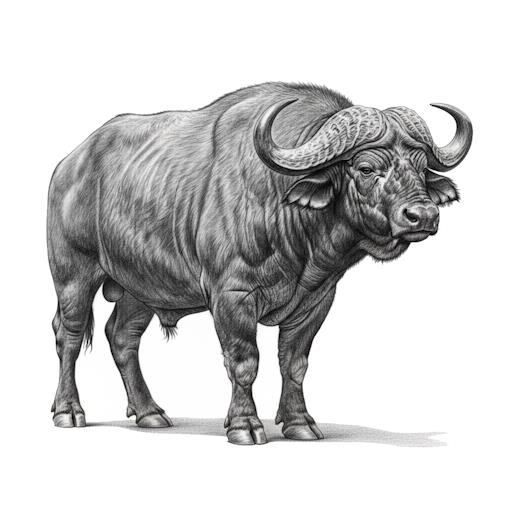
African Buffalo
Classification
Mammalia > Artiodactyla > Bovidae > Syncerus > S. caffer
Native To
Conservation Status
Average Height
4 - 5.5 feet
(1.2 - 1.7 m)
Average Weight
1,000 - 2,000 lbs
(454 - 907 kg)
Average Life Span
15 - 25 years
Gestation Period
340 days
Did You Know?
The African Buffalo is a large bovine native to Africa.
They are known for their formidable horns, which can fuse together to form a continuous bone shield across the top of their heads, known as a "boss."
Despite their bovine appearance, African Buffalo are not considered ancestors of domestic cattle and are notoriously dangerous, often referred to as "Black Death" or "Widowmaker."
They live in large herds, sometimes numbering in the thousands, and are highly dependent on water, never straying far from a water source.
African Buffalo are primarily grazers, feeding on grasses.
They have a symbiotic relationship with oxpecker birds, which feed on parasites and warn the buffalo of danger.
There are several subspecies of African Buffalo, including the Cape buffalo (the largest and most common) and the forest buffalo.
Photo Gallery
No images provided yet. Be the first to upload one!