American Bison
The American Bison, often called the Buffalo, is a symbol of the American West and a true conservation success story. Once numbering in the tens of millions, they were hunted to near extinction in the 19th century. Today, thanks to dedicated conservation efforts, their numbers have rebounded. The American Bison is the largest land mammal in North America.
They are herbivores that live in large herds and their grazing helps maintain the health of the grassland ecosystem. They have a thick, shaggy coat that protects them from the harsh winters and a powerful shoulder hump.
They are a vital part of the North American ecosystem, and their presence helps support a wide variety of other species.
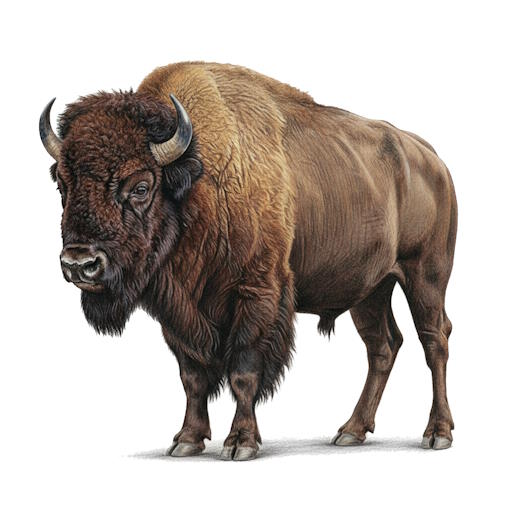
American Bison
Classification
Mammalia > Artiodactyla > Bovidae > Bison > B. bison
Native To
Conservation Status
Average Height
5 - 6.5 feet
(1.5 - 2 m)
Average Weight
1,000 - 2,000 lbs
(454 - 907 kg)
Average Life Span
15 - 20 years
Gestation Period
285 days
Did You Know?
The American Bison is the largest land mammal in North America.
Both male and female American Bison have horns that can grow up to two feet long.
American Bison can run at speeds up to 35 miles per hour.
Despite their large size, American Bison are surprisingly agile and can jump over obstacles up to 6 feet high.
American Bison were once widespread across North America, but their populations dramatically declined due to overhunting in the 19th century.
Conservation efforts have helped bring American Bison back from the brink of extinction.
American Bison communicate using a variety of sounds, including grunts, bellows, and snorts.
A group of American Bison is called a herd.
American Bison play an important role in prairie ecosystems by grazing and disturbing the soil, which helps new plants grow.
Photo Gallery
No images provided yet. Be the first to upload one!