Antarctic Toothfish
The Antarctic Toothfish, also known as the Patagonian Toothfish or Chilean Sea Bass, is a large, cold-water fish native to the deep waters of the Southern Ocean.
It has a unique physiology that allows it to survive in sub-freezing temperatures, including a special antifreeze protein in its blood.
The Antarctic Toothfish is a top predator in its environment, preying on other fish and squid. It is an important part of the food chain, and it is a commercially valuable fish. However, its slow growth and long life make it vulnerable to overfishing. Conservation efforts are in place to ensure the long-term survival of this fascinating fish.
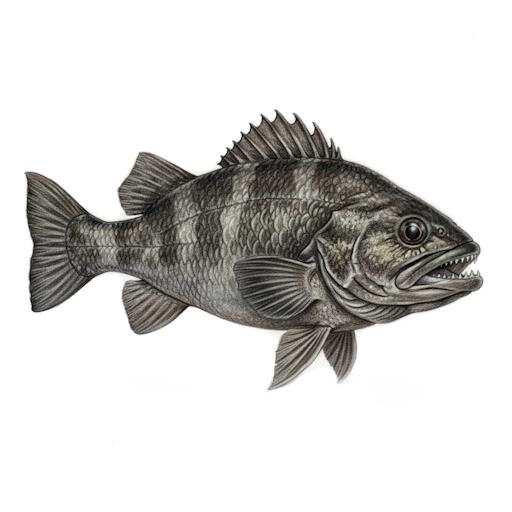
Antarctic Toothfish
Classification
Actinopterygii > Perciformes > Nototheniidae > Dissostichus > D. mawsoni
Native To
Conservation Status
Average Height
4 - 6 feet
(1.2 - 1.8 m)
Average Weight
100 - 200 lbs
(45 - 90 kg)
Average Life Span
30 - 40 years
Gestation Period
NA
Did You Know?
The Antarctic Toothfish can grow up to 2 meters (6.5 feet) long and weigh over 100 kilograms (220 pounds).
They live in the frigid waters around Antarctica and can tolerate temperatures below freezing thanks to a natural "antifreeze" in their blood.
Antarctic Toothfish are long-lived, some individuals living for over 50 years.
They are apex predators in their ecosystem, feeding on fish, squid, and other bottom-dwelling organisms.
Due to their slow growth and long lifespan, Antarctic Toothfish are vulnerable to overfishing.
Photo Gallery
No images provided yet. Be the first to upload one!