Bactrian Camel
The Bactrian Camel is a large camelid species native to the rocky deserts of Central Asia. It is known for its two large humps, which are used to store fat, not water, and its thick, shaggy coat that protects it from the extreme temperatures of its environment.
The Bactrian Camel is an incredible survivor, able to withstand temperatures from -20°F to over 120°F. It can go for long periods without water and can eat a wide variety of tough, thorny plants. It has a long and important history as a pack animal on the Silk Road, where it carried goods across the vast deserts of Central Asia.
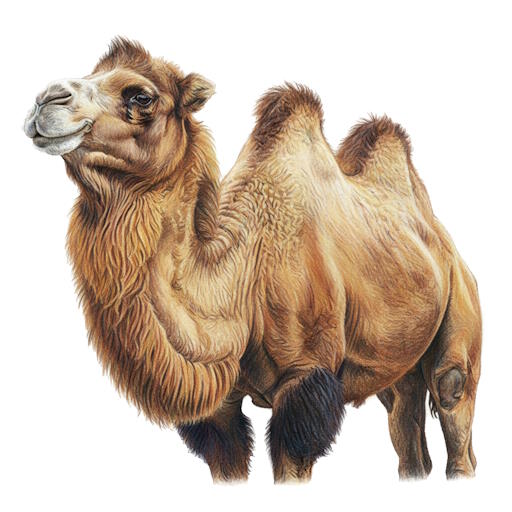
Bactrian Camel
Classification
Mammalia > Artiodactyla > Camelidae > Camelus > C. bactrianus
Native To
Conservation Status
Average Height
6 - 7.5 feet
(1.8 - 2.3 m)
Average Weight
1,000 - 1,500 lbs
(450 - 680 kg)
Average Life Span
40 - 50 years
Gestation Period
360 - 400 days
Did You Know?
The Bactrian Camel is a large, even-toed ungulate native to the steppes of Central Asia.
Unlike their dromedary (Arabian) camel cousins, Bactrian Camels have two humps, which store fat, not water, and can be used for energy during long journeys.
They are incredibly well-adapted to extreme climates, capable of withstanding temperatures from -20°F to 120°F (-29°C to 49°C).
Bactrian Camels can drink up to 30 gallons (113 liters) of water in just 13 minutes.
Their thick, shaggy coat helps them stay warm in winter and sheds in large clumps in spring, providing insulation.
These camels have broad, two-toed feet with leathery pads that help them navigate sandy or rocky terrain without sinking.
Bactrian Camels can close their nostrils to keep out sand during dust storms.
They can live for up to 50 years.
Photo Gallery
No images provided yet. Be the first to upload one!