Capybara
The Capybara is a large and gentle rodent native to the tropical and temperate regions of Central and South America. It is the largest living rodent in the world, with a body weight of up to 150 pounds.
The Capybara is a semi-aquatic animal that spends most of its time in or near water. It is a highly social animal that lives in large family groups. Its diet consists of grasses and aquatic plants.
The Capybara is a vital part of its ecosystem, and its presence is an indicator of a healthy and diverse wetland environment.
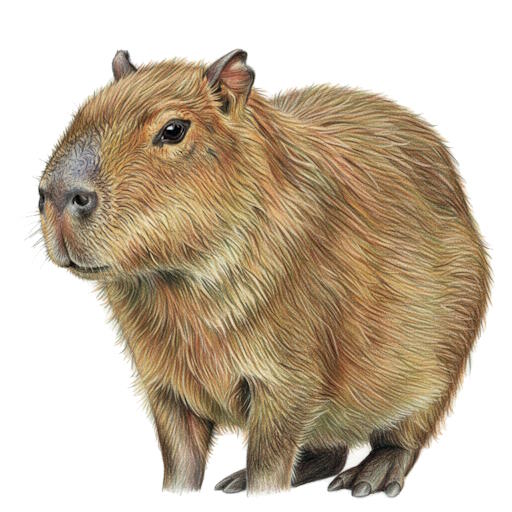
Capybara
Classification
Mammalia > Rodentia > Hydrochaeridae > Hydrochoerus > H. hydrochaeris
Native To
Conservation Status
Average Height
1.5 - 2 feet
(0.4 - 0.6 m)
Average Weight
75 - 150 lbs
(34 - 68 kg)
Average Life Span
8 - 10 years
Gestation Period
150 days
Did You Know?
The Capybara is the largest rodent in the world! They can weigh over 100 pounds and grow to be over 4 feet long.
Capybaras are semi-aquatic, meaning they love water! They have webbed feet and can hold their breath for up to five minutes underwater.
They are highly social animals and live in groups of 10 to 20 individuals, sometimes even more!
Capybaras communicate through a variety of sounds, including barks, whistles, and purrs.
They are herbivores and primarily eat grasses, aquatic plants, and fruits.
Capybaras are often seen "sharing" their backs with birds like the Capybara bird, which eats ticks and other parasites off their skin.
Photo Gallery
No images provided yet. Be the first to upload one!