Caribou
The Caribou is a species of deer native to the Arctic and sub-Arctic regions of North America. It is the only species of deer where both males and females grow antlers.
The Caribou is a grazer that feeds on a variety of plants and lichens. It is known for its incredible long-distance migration, which can be over 3,000 miles. They travel in large herds, and their migration is a vital part of the Arctic ecosystem.
The Caribou is a true symbol of the North American wilderness and a vital part of the food chain for a variety of animals.
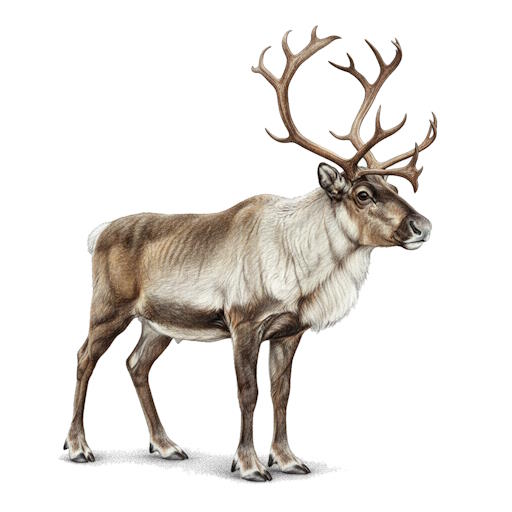
Caribou
Classification
Mammalia > Artiodactyla > Cervidae > Rangifer > R. tarandus
Native To
Conservation Status
Average Height
3 - 4.5 feet
(0.9 - 1.4 m)
Average Weight
250 - 400 lbs
(113 - 181 kg)
Average Life Span
10 - 15 years
Gestation Period
225 - 235 days
Did You Know?
Both male and female Caribou grow antlers, a unique trait among deer species.
Caribou undertake some of the longest land migrations of any mammal, traveling thousands of miles each year.
Their hooves are specially adapted to help them walk on snow and ice, and to dig for lichen, their primary food source in winter.
A group of Caribou is called a herd.
They can swim across wide rivers and lakes, using their antlers to help them steer.
Photo Gallery
No images provided yet. Be the first to upload one!