Dromedary
The Dromedary, also known as the Arabian Camel, is a large camelid species native to the arid deserts of the Middle East and Africa. It is known for its single hump, which is used to store fat. This fat can be converted into energy and water when food and water are scarce.
The Dromedary is an incredible survivor, able to withstand extreme temperatures and go for long periods without water. It has a long and important history as a pack animal, where it has been used for thousands of years to transport goods and people across the deserts.
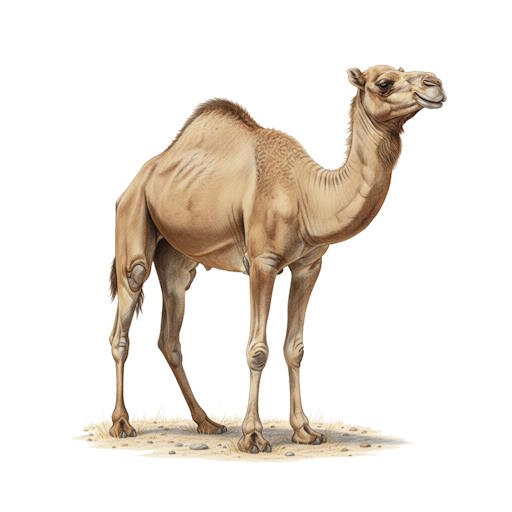
Dromedary
Classification
Mammalia > Artiodactyla > Camelidae > Camelus > C. dromedarius
Conservation Status
Average Height
6 - 7.5 feet
(1.8 - 2.3 m)
Average Weight
660 - 1,300 lbs
(300 - 600 kg)
Average Life Span
40 - 50 years
Gestation Period
360 - 400 days
Did You Know?
The Dromedary, also known as the Arabian camel, has one hump on its back, unlike the Bactrian camel which has two.
This hump is not filled with water, but with fat, which serves as a vital energy reserve and helps them survive in arid environments.
Dromedaries can drink up to 40 gallons of water in one go and can go for long periods without water.
Their broad, leathery pads on their feet help them walk easily on sand without sinking.
Dromedaries have long eyelashes and nostrils that can close, protecting them from sandstorms.
They can live for 40 to 50 years.
Photo Gallery
No images provided yet. Be the first to upload one!