Eastern Elk
The Eastern Elk was a subspecies of elk native to the eastern and central United States. It was a large and powerful animal that roamed in large herds.
The Eastern Elk was a grazer that fed on a variety of grasses and plants. It is believed to have been a vital part of its ecosystem, as its grazing habits helped to maintain the health of the grasslands.
The Eastern Elk is believed to have been hunted to extinction in the late 19th century. Its extinction is a tragic reminder of the impact of human activity on our planet's biodiversity.
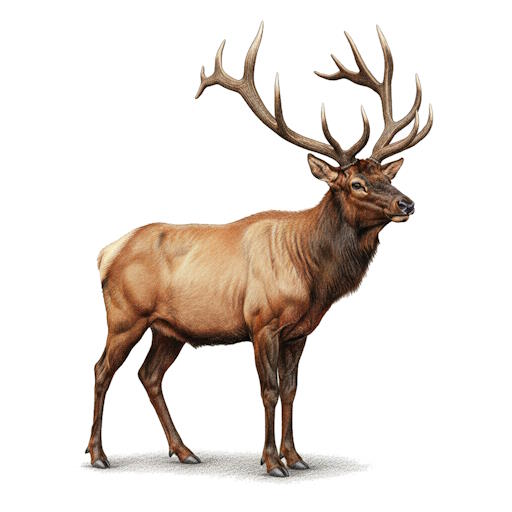
Eastern Elk
Classification
Mammalia > Artiodactyla > Cervidae > Cervus > C. canadensis
Native To
Conservation Status
Average Height
4 - 5 feet
(1.2 - 1.5 m)
Average Weight
700 - 1,000 lbs
(318 - 454 kg)
Average Life Span
10 - 15 years
Gestation Period
240 - 262 days
Did You Know?
The Eastern Elk was once widespread across eastern North America but was declared extinct in the late 19th century due to overhunting and habitat loss.
Conservation efforts have led to the reintroduction of elk to parts of their historical range, often using elk from other subspecies.
Male Eastern Elk, called bulls, grow large antlers that can weigh up to 40 pounds and are shed annually.
They are herbivores, primarily grazing on grasses, forbs, and shrubs.
Eastern Elk communicate through a variety of sounds, including bugling, which is especially prominent during the fall mating season.
They are social animals and live in herds, though herd sizes can vary.
Photo Gallery
No images provided yet. Be the first to upload one!