European Polecat
The European Polecat is a small carnivore native to Europe and Asia. It is a member of the weasel family, and it is known for its dark, mottled coat and its distinctive mask-like facial markings.
The European Polecat is a powerful and opportunistic predator that preys on a variety of animals, including rodents, birds, and other small invertebrates. It is a vital part of its ecosystem, as its presence helps to control the populations of its prey.
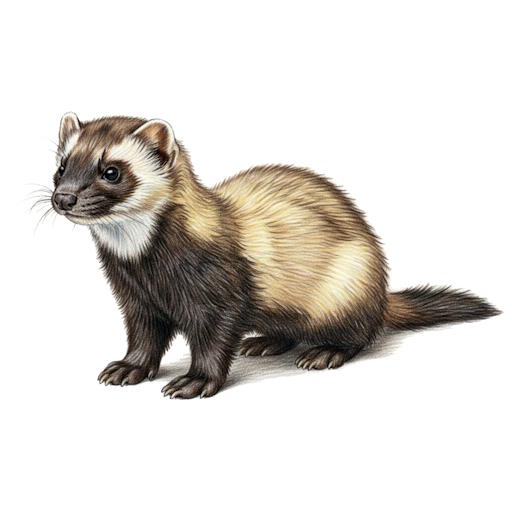
European Polecat
Classification
Mammalia > Carnivora > Mustelidae > Mustela > M. putorius
Native To
Conservation Status
Average Height
1 - 1.5 feet
(0.3 - 0.5 m)
Average Weight
2 - 3 lbs
(0.9 - 1.4 kg)
Average Life Span
5 - 6 years
Gestation Period
42 days
Did You Know?
The European Polecat is a carnivorous mammal native to Eurasia, known for its strong musky odor.
They are nocturnal hunters, preying on rodents, birds, frogs, and even small rabbits.
Despite their wild nature, polecats are the ancestors of the domestic ferret.
European Polecats are excellent swimmers and can hunt in water.
They have a distinctive dark mask across their eyes, contrasting with their lighter fur.
When threatened, a European Polecat can spray a foul-smelling liquid from glands near its tail as a defense mechanism.
They typically live in woodlands, grasslands, and farmlands, often near water.
Photo Gallery
No images provided yet. Be the first to upload one!