Eutatus
The Eutatus was a massive, extinct species of armadillo relative native to South America. It was known for its unique, flexible shell, which was made up of thousands of small, bony plates.
The Eutatus was a herbivore that fed on a variety of plants and grasses. It is believed to have become extinct around 10,000 years ago, likely due to a combination of climate change and hunting by early humans.
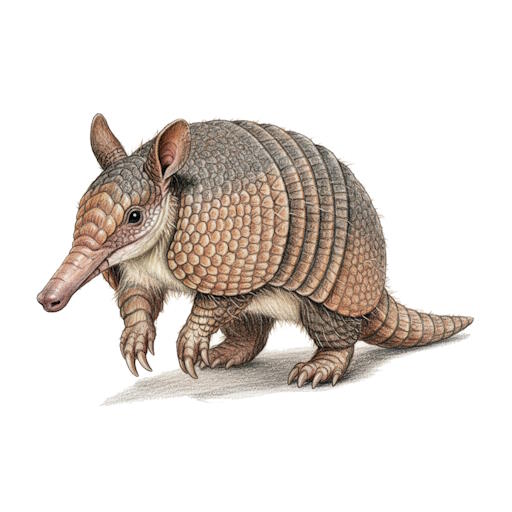
Eutatus
Classification
Mammalia > Cingulata > Dasypodidae > Eutatus > E. punctatus
Native To
Conservation Status
Average Height
1.5 feet
(0.5 m)
Average Weight
100 lbs
(45 kg)
Average Life Span
10 - 15 years
Gestation Period
120 days
Did You Know?
The Eutatus is an extinct genus of armadillo-like mammals that lived in South America during the Miocene to Pleistocene epochs.
It was much larger than modern armadillos, with some species estimated to be the size of a small car.
The Eutatus had a bony carapace, similar to modern armadillos, but it also had a unique feature: a single, large, scythe-like claw on its forefeet.
Scientists believe this specialized claw may have been used for digging, perhaps to unearth roots or tubers, or even to dig burrows for shelter.
Fossils of Eutatus have been found in various parts of South America, including Argentina and Uruguay.
Photo Gallery
No images provided yet. Be the first to upload one!