Flying Fox
The Flying Fox is a genus of large bats native to the tropical regions of Africa, Asia, and Australia. It is the largest bat in the world, with a wingspan of up to 5 feet.
The Flying Fox is a nocturnal and social animal that forages for a variety of fruits, flowers, and nectar. It is a vital part of its ecosystem, as its fruit-eating and nectar-feeding habits help to disperse seeds and pollinate flowers.
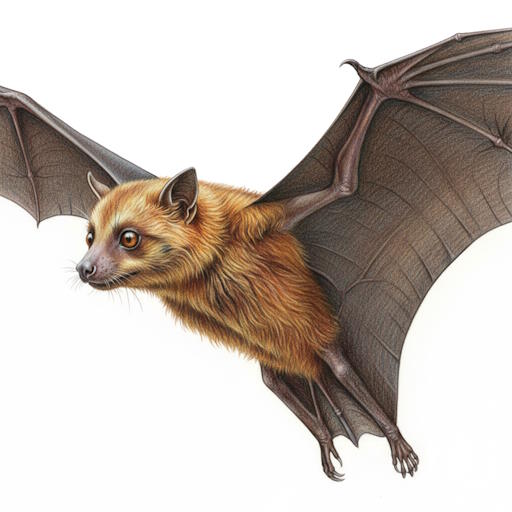
Flying Fox
Classification
Mammalia > Chiroptera > Pteropodidae > Pteropus > P. giganteus
Conservation Status
Average Height
3 - 4 feet
(0.9 - 1.2 m)
Average Weight
1 - 3 lbs
(0.5 - 1.4 kg)
Average Life Span
15 - 20 years
Gestation Period
140 - 150 days
Did You Know?
The Flying Fox is the largest bat in the world, with some species having a wingspan of up to 5 feet!
Despite their name, Flying Foxes are actually fruit bats and primarily eat fruit, nectar, and pollen.
They play a vital role in their ecosystems by pollinating flowers and dispersing seeds.
Flying Foxes are highly social animals and often roost in large colonies, sometimes numbering in the thousands.
They have excellent eyesight and a keen sense of smell, which they use to find food at night.
Unlike many other bats, Flying Foxes do not use echolocation.
Some species of Flying Foxes can live for over 20 years in the wild.
Photo Gallery
No images provided yet. Be the first to upload one!