Hippopotamus
The Hippopotamus is a large, semi-aquatic mammal native to the rivers and lakes of Africa. It is the third-largest living land animal.
The Hippopotamus is a herbivore that feeds on a variety of grasses and plants. It is a vital part of its ecosystem, as its dung helps to fertilize the water, which in turn helps to support a wide variety of other species.
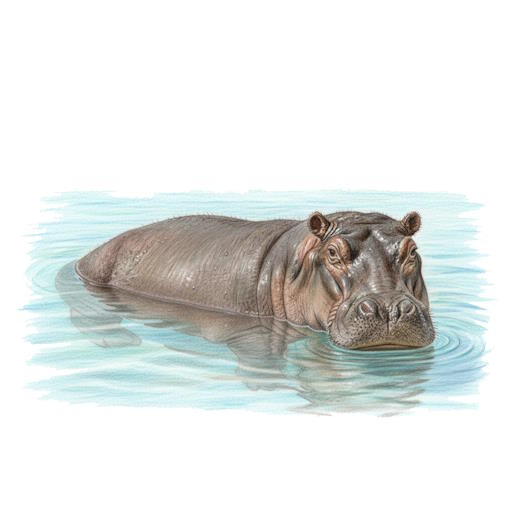
Hippopotamus
Classification
Mammalia > Artiodactyla > Hippopotamidae > Hippopotamus > H. amphibius
Native To
Conservation Status
Average Height
4 - 5 feet
(1.2 - 1.5 m)
Average Weight
3,000 - 4,000 lbs
(1,360 - 1,814 kg)
Average Life Span
40 - 50 years
Gestation Period
240 days
Did You Know?
The Hippopotamus is the third largest land mammal, after elephants and some rhinos.
Despite their large size, Hippopotamuses are excellent swimmers and can hold their breath underwater for up to 5 minutes.
Their name means "river horse" in ancient Greek, and they spend most of their days in water to keep cool.
Hippopotamuses secrete a reddish, oily substance that acts as a natural sunscreen and moisturizer, often mistaken for blood or sweat.
They are herbivores and primarily graze on grass at night.
Although they look friendly, Hippopotamuses are one of the most dangerous animals in Africa.
A baby Hippopotamus is called a calf, and they can suckle underwater.
Photo Gallery
No images provided yet. Be the first to upload one!