Honey Badger
The Honey Badger (Mellivora capensis) is a medium-sized mammal native to Africa, Southwest Asia, and the Indian subcontinent. It holds the Guinness World Record for the "World's Most Fearless Creature," and for good reason. Despite its relatively small size, this member of the weasel family is renowned for its ferocity, strength, and tenacity.
Honey Badgers have thick, loose skin that's tough to penetrate, and it can wriggle around in its skin to bite an aggressor even when held. They are highly intelligent and opportunistic hunters, with a diverse diet that includes insects, birds, small rodents, and even venomous snakes. They are immune to the venom of some snakes, such as the puff adder and cobra. Their powerful claws and jaws allow them to dig burrows quickly and break into beehives to get to their favorite treat—honey. Their fierce reputation is well-earned, as they have been known to drive off much larger predators.
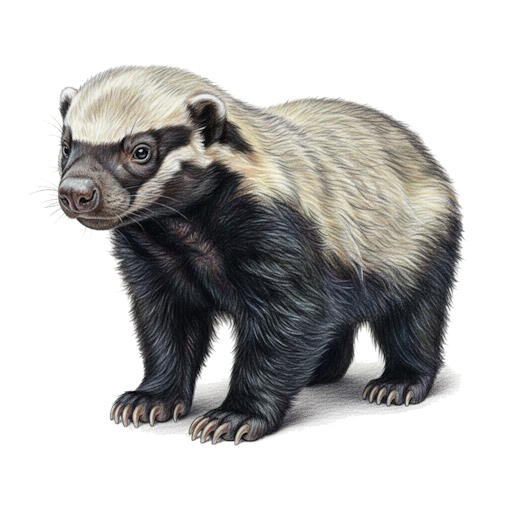
Honey Badger
Classification
Mammalia > Carnivora > Mustelidae > Mellivora > M. capensis
Native To
Conservation Status
Average Height
1 feet
(0.3 m)
Average Weight
15 - 30 lbs
(6.8 - 14 kg)
Average Life Span
15 - 20 years
Gestation Period
50 - 55 days
Did You Know?
The Honey Badger is known for its fearless and aggressive nature, often confronting much larger animals.
They have incredibly thick and loose skin, which makes them difficult for predators to grip.
Despite their name, their diet is not just honey; they are omnivores and eat snakes, rodents, birds, and even scorpions.
Honey Badgers are highly intelligent and have been observed using tools to get to their prey.
They have powerful claws that allow them to dig burrows quickly and efficiently.
The Honey Badger is largely solitary and nocturnal.
Their scientific name, Mellivora capensis, means "honey eater of the Cape."
Photo Gallery
No images provided yet. Be the first to upload one!