Icefish
The Antarctic Icefish is a remarkable family of fish that live in the frigid waters of the Southern Ocean. They are the only vertebrates known to have no red blood cells or hemoglobin. Hemoglobin is the protein that carries oxygen in the blood, and its absence is a striking evolutionary adaptation. To compensate, Icefish have a larger heart, a higher blood volume, and a network of capillaries that allow them to absorb oxygen directly from the cold, oxygen-rich seawater. The cold water itself holds more dissolved oxygen than warmer water, which facilitates this unique process. Additionally, they produce natural antifreeze proteins in their blood to prevent their bodies from freezing. These incredible adaptations allow them to survive and thrive in one of the most extreme environments on Earth.
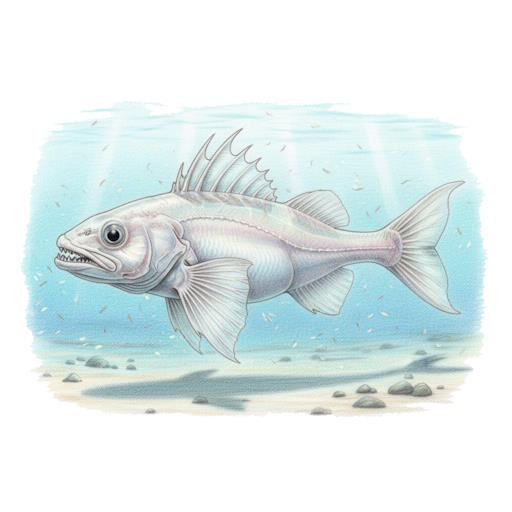
Icefish
Classification
Actinopterygii > Perciformes > Channichthyidae > Channichthys > C. rhinoceratus
Native To
Conservation Status
Average Height
1 - 1.5 feet
(0.3 - 0.5 m)
Average Weight
1 - 2 lbs
(0.5 - 0.9 kg)
Average Life Span
10 - 15 years
Gestation Period
NA
Did You Know?
The Icefish has a natural "antifreeze" in its blood, allowing it to survive in sub-zero Antarctic waters.
Unlike most vertebrates, the Icefish has no red blood cells or hemoglobin, giving its blood a clear appearance.
Its unique, translucent appearance is due to the lack of red blood cells.
Icefish absorb oxygen directly through their skin from the oxygen-rich cold waters.
They are slow-moving fish, relying on ambush predation for their diet of krill and small fish.
Photo Gallery
No images provided yet. Be the first to upload one!