Impala
The Impala is a medium-sized antelope native to eastern and southern Africa. Known for their slender build, reddish-brown coat, and elegant S-shaped horns on the males, Impalas are one of the most common and graceful animals on the savanna. Their name is derived from the Zulu language, meaning "gazelle."
Impalas are famous for their incredible jumping ability, leaping up to 10 feet high and 30 feet in a single bound, often in a series of powerful, synchronized jumps. They use this remarkable display to evade predators and to confuse a pursuing hunter, such as a leopard or a cheetah. They are social animals, living in large herds that can be either male-dominated or female-dominated. Their presence is a vital part of the African ecosystem, as they serve as a primary food source for many of Africa's top predators.
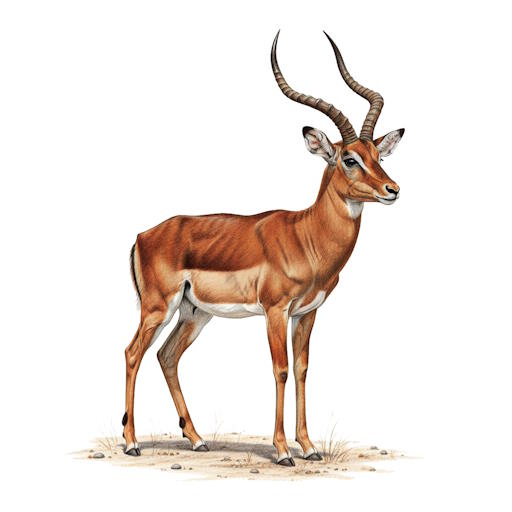
Impala
Classification
Mammalia > Artiodactyla > Bovidae > Aepyceros > A. melampus
Native To
Conservation Status
Average Height
2.5 - 3 feet
(0.8 - 0.9 m)
Average Weight
100 - 170 lbs
(45 - 77 kg)
Average Life Span
12 - 15 years
Gestation Period
195 - 200 days
Did You Know?
The Impala is a medium-sized antelope found in savannas and woodlands across Eastern and Southern Africa.
Male Impalas have long, lyre-shaped horns that can grow up to 36 inches (92 cm) long, used for fighting rivals and defending territory.
Impalas are incredibly agile and known for their spectacular leaps, which can cover distances of up to 33 feet (10 meters) and reach heights of 10 feet (3 meters) in a single bound, helping them escape predators.
They can switch between grazing and browsing, eating both grasses and leaves, depending on the availability of food.
Impalas are social animals and live in herds, which can vary in size and composition depending on the season and gender.
During the breeding season, dominant male Impalas establish territories and gather harems of females.
They have a distinctive "M" shaped marking on their rear, which is often visible when they leap away from danger.
Photo Gallery
No images provided yet. Be the first to upload one!