Indian Muntjac
The Indian Muntjac (Muntiacus muntjak) is a small species of deer native to South and Southeast Asia. It is also known as the "barking deer" due to the loud, dog-like bark it produces when it senses a predator or is disturbed. This vocalization is its primary form of communication.
The male muntjac has small, simple antlers and also possesses long, sharp canine teeth, which protrude from its upper jaw and are used in fights with other males. These fangs are a surprising and fascinating feature for a deer. They are shy, solitary animals that primarily live in thick forests and grasslands. Their diet consists of leaves, grass, and fruits. Despite their small size, they are a surprisingly resilient and widespread species, thriving in various habitats.
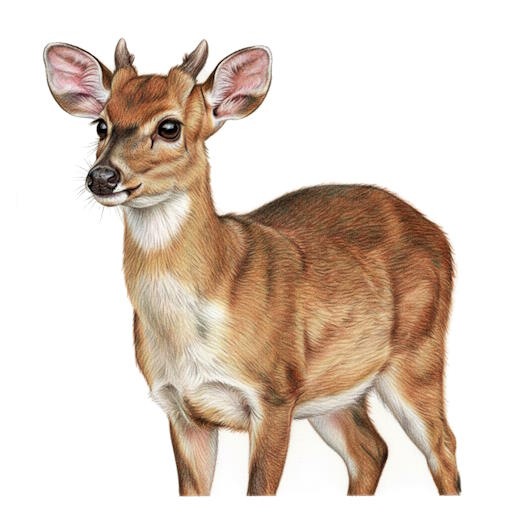
Indian Muntjac
Classification
Mammalia > Artiodactyla > Cervidae > Muntiacus > M. muntjak
Native To
Conservation Status
Average Height
1.5 - 2 feet
(0.5 - 0.6 m)
Average Weight
30 - 40 lbs
(14 - 18 kg)
Average Life Span
10 - 15 years
Gestation Period
180 days
Did You Know?
The Indian Muntjac is also known as the barking deer due to the loud, dog-like sound it makes when alarmed.
These small deer are found across South and Southeast Asia, preferring dense forests and woodlands.
Male Indian Muntjacs have short antlers that they shed annually, and they also possess long canine teeth that protrude from their mouths.
They are primarily solitary animals, except during the mating season.
Indian Muntjacs are herbivores, feeding on a variety of leaves, fruits, seeds, and even bird eggs.
Photo Gallery
No images provided yet. Be the first to upload one!