Indian Pangolin
The Indian Pangolin (Manis crassicaudata) is a medium-sized pangolin species native to the Indian subcontinent. It is easily recognizable by its unique armor of large, keratin scales that cover its entire body, providing excellent protection against predators.
When threatened, the pangolin can roll into a tight ball, making it nearly impossible for a predator to bite or harm it. Like other pangolins, it is a nocturnal and solitary animal that primarily eats ants and termites, using its long, sticky tongue to scoop up insects from their nests. The pangolin's name comes from the Malay word "pengguling," which means "roller-up."
Sadly, the Indian Pangolin is critically endangered due to habitat loss and intense poaching for its scales, which are used in traditional medicine, despite having no proven medicinal properties.
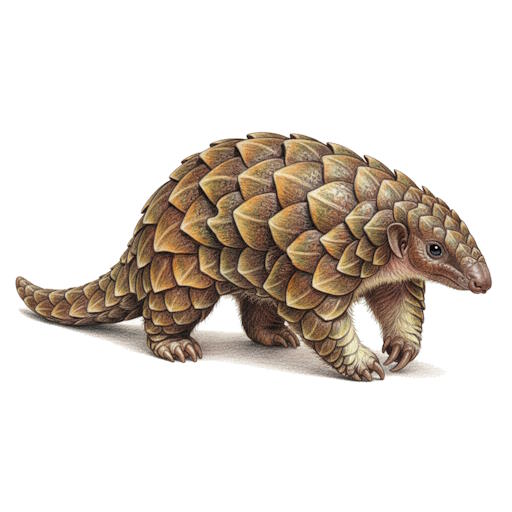
Indian Pangolin
Native To
Conservation Status
Average Height
2 - 3 feet
(0.6 - 0.9 m)
Average Weight
15 - 25 lbs
(6.8 - 11.3 kg)
Average Life Span
10 - 15 years
Gestation Period
180 days
Did You Know?
The Indian Pangolin is a nocturnal mammal found in various parts of Asia.
They are unique for being the only mammals covered in scales, which are made of keratin, the same material as human fingernails.
When threatened, the Indian Pangolin can roll itself into a tight ball, offering protection from predators.
Their long, sticky tongues can extend up to 16 inches, which they use to catch ants and termites.
Indian Pangolins play an important role in their ecosystem by consuming large quantities of insects, helping to control pest populations.
Photo Gallery
No images provided yet. Be the first to upload one!