Jaguar
The Jaguar (Panthera onca) is the largest cat species in the Americas and a powerful apex predator.
With its beautiful spotted coat, short limbs, and stocky build, it is easily confused with a leopard, but the Jaguar's spots are more complex, with smaller dots inside the rosettes. It is renowned for its incredibly powerful bite, which is strong enough to pierce the shells of turtles and the skulls of its prey.
Unlike most cats, Jaguars are excellent swimmers and are often found near water. They are solitary and territorial animals, playing a crucial role in controlling the populations of their prey, which includes capybaras, deer, and caimans. The Jaguar is a symbol of power and strength in many indigenous cultures of Central and South America. They are a near-threatened species, facing habitat loss and human conflict.
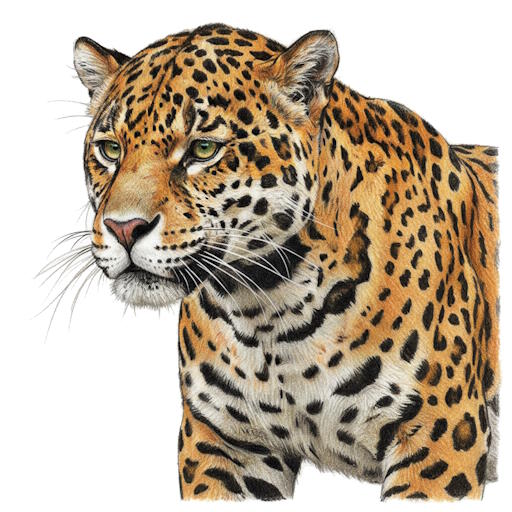
Jaguar
Native To
Conservation Status
Average Height
2.5 feet
(0.8 m)
Average Weight
100 - 250 lbs
(45 - 113 kg)
Average Life Span
12 - 15 years
Gestation Period
93 - 105 days
Did You Know?
The Jaguar is the largest cat in the Americas.
They are excellent swimmers and often hunt in water.
Each Jaguar has unique rosette patterns on its fur, similar to human fingerprints.
Unlike many other big cats, Jaguars do not roar; instead, they have a distinctive "sawing" vocalization.
Jaguars have an incredibly powerful bite, capable of piercing the shells of turtles.
Photo Gallery
No images provided yet. Be the first to upload one!