Javan Rhinoceros
The Javan Rhinoceros (Rhinoceros sondaicus) is a highly endangered species of rhino, with a population of only a few dozen individuals remaining in a single national park in Indonesia. It is one of the five living rhino species, and with a single horn on its nose (or no horn at all in females), it resembles the Indian Rhinoceros, though it is smaller.
The Javan Rhino has a grayish-brown, armor-plated skin that gives it a prehistoric appearance. It is a solitary and elusive animal, making it difficult to study in the wild. Its decline is primarily due to poaching for its horn, which is highly valued in traditional medicine, and habitat loss. The Javan Rhino is one of the world's most critically endangered animals, and its survival hangs by a thread.
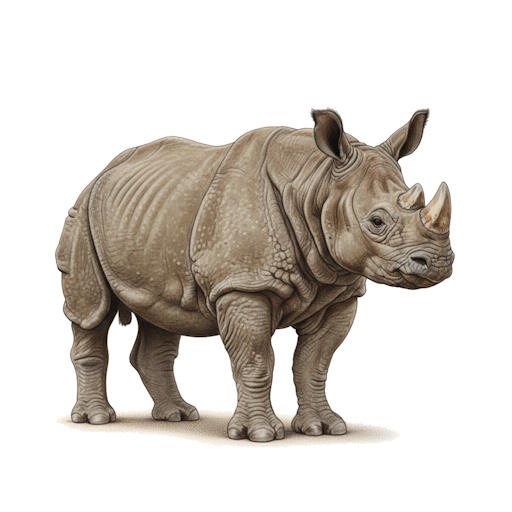
Javan Rhinoceros
Classification
Mammalia > Perissodactyla > Rhinocerotidae > Rhinoceros > R. sondaicus
Native To
Conservation Status
Average Height
4.5 - 5.5 feet
(1.4 - 1.7 m)
Average Weight
2,000 - 3,000 lbs
(900 - 1,360 kg)
Average Life Span
30 - 45 years
Gestation Period
450 - 480 days
Did You Know?
The Javan Rhinoceros is one of the most critically endangered large mammals in the world, with fewer than 80 individuals remaining.
They are the rarest of the five rhinoceros species.
Javan Rhinoceros have a single horn, which is usually quite small (less than 10 inches) and often absent in females.
They are solitary animals and are very shy, making them difficult to spot in the wild.
Javan Rhinoceros are primarily browsers, feeding on a wide variety of plants, including leaves, twigs, and fruits.
Photo Gallery
No images provided yet. Be the first to upload one!