Leopard
The Leopard (Panthera pardus) is a large feline species native to a wide range of habitats in Africa and Asia. It is the most widespread of the big cats and is known for its stunning, rosetted coat, which provides excellent camouflage.
The Leopard is a solitary and stealthy predator, famous for its ability to drag its prey, which can be heavier than itself, up into a tree to keep it safe from other predators like lions and hyenas.
Leopards are highly adaptable and can be found in a variety of habitats, from rainforests to deserts. They are a powerful and elusive species, a testament to their ability to survive and thrive in a world increasingly dominated by humans.
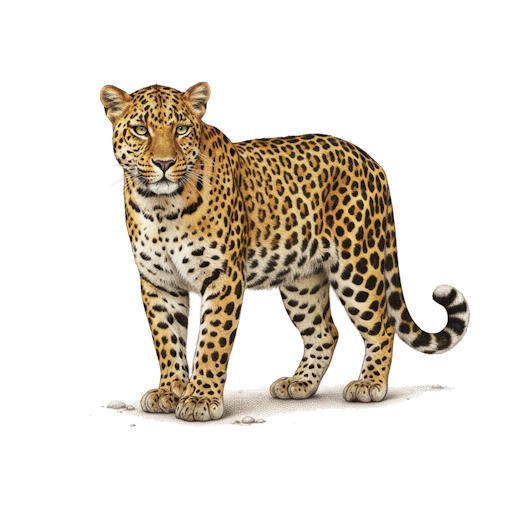
Leopard
Native To
Conservation Status
Average Height
2 - 2.5 feet
(0.6 - 0.8 m)
Average Weight
65 - 150 lbs
(30 - 68 kg)
Average Life Span
12 - 17 years
Gestation Period
90 - 105 days
Did You Know?
The Leopard is a large cat native to Africa and Asia, known for its distinctive rosette-patterned coat.
They are incredibly agile and powerful climbers, often hauling their prey into trees to keep it safe from other predators.
Leopards are solitary animals and are primarily nocturnal, meaning they are active at night.
They are opportunistic hunters and have a very diverse diet, eating anything from insects to large antelopes.
A Leopard's spots are unique to each individual, much like human fingerprints.
Photo Gallery
No images provided yet. Be the first to upload one!