Little Brown Bat
The Little Brown Bat (Myotis lucifugus) is a common species of bat found throughout North America. It is a small bat, with a wingspan of only about 8-11 inches.
The Little Brown Bat is an insectivore, feeding on a wide variety of insects, including mosquitoes, moths, and beetles. It is a crucial part of the ecosystem, as a single bat can eat up to 1,000 insects in a single night. They are a nocturnal species, roosting in caves, trees, and buildings during the day.
Unfortunately, the Little Brown Bat is currently facing a severe threat from a fungal disease called White-nose Syndrome, which has decimated populations across North America.
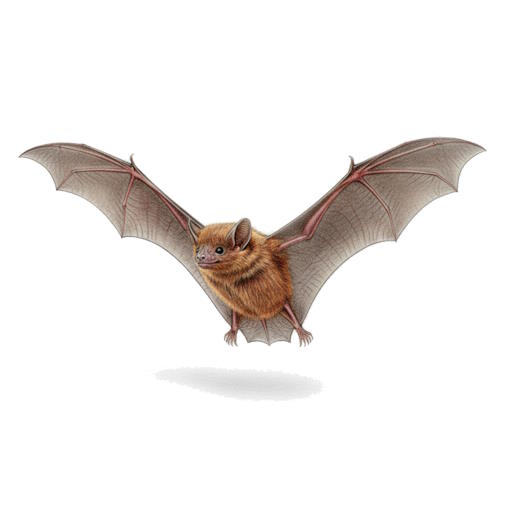
Little Brown Bat
Classification
Mammalia > Chiroptera > Vespertilionidae > Myotis > M. lucifugus
Native To
Conservation Status
Average Height
3 - 4 inches
(8 - 10 cm)
Average Weight
0.2 - 0.4 oz
(5 - 11 g)
Average Life Span
6 - 7 years
Gestation Period
50 - 60 days
Diet
Insectivore (insects)
Social Structure
Colony
Biomes
(And Habitats)
Rocky/Steep Habitats and Temperate Forest
(Caves and Forests)
Did You Know?
The Little Brown Bat is one of the most common bat species in North America.
They can eat up to 1,000 mosquito-sized insects in a single hour, helping control insect populations!
Little Brown Bats hibernate in large groups in caves and mines during the winter months.
They use echolocation, sending out sound waves and listening for echoes, to navigate and find prey in the dark.
A single Little Brown Bat can live for over 30 years.
Photo Gallery
No images provided yet. Be the first to upload one!