Lowland Tapir
The Lowland Tapir (Tapirus terrestris) is a large, herbivorous mammal native to the rainforests and wetlands of South America. It is easily recognizable by its unique, short, and flexible snout, which is a prehensile appendage used to grasp leaves and fruit.
The Lowland Tapir is a solitary and nocturnal animal. It is an excellent swimmer and often takes to the water to escape predators or cool off. The tapir is often referred to as a "living fossil" as it has changed very little over millions of years. It plays a crucial role in the ecosystem as a seed disperser, helping to regenerate the forest.
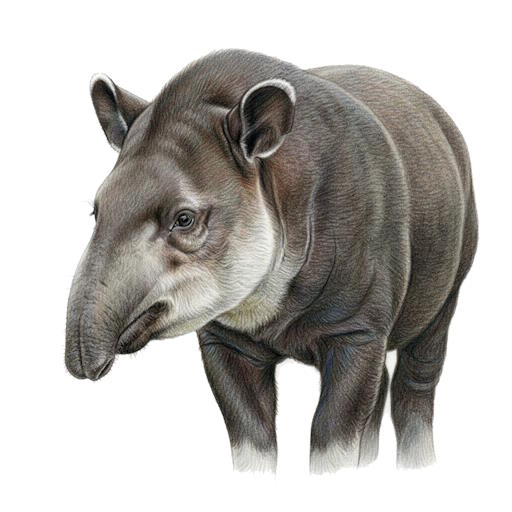
Lowland Tapir
Classification
Mammalia > Perissodactyla > Tapiridae > Tapirus > T. terrestris
Native To
Conservation Status
Average Height
2.5 - 3 feet
(0.8 - 0.9 m)
Average Weight
400 - 600 lbs
(180 - 270 kg)
Average Life Span
25 - 30 years
Gestation Period
390 - 400 days
Did You Know?
The Lowland Tapir is a large, herbivorous mammal native to South America.
They are excellent swimmers and often spend time in water to escape predators and cool down.
The Lowland Tapir has a short, flexible proboscis (snout) which it uses to grab leaves and fruits.
Baby tapirs have distinctive striped and spotted coats, which help camouflage them in the forest.
They play an important role in seed dispersal by eating fruits and spreading seeds through their droppings.
Photo Gallery
No images provided yet. Be the first to upload one!