Mexican Free-tailed Bat
The Mexican Free-tailed Bat (Tadarida brasiliensis) is a species of bat native to the Americas. It is known for its incredible long-distance migrations, with some individuals traveling up to 1,000 miles.
The Mexican Free-tailed Bat also forms some of the largest colonies of any mammal, with a single cave in Texas housing over 20 million bats. It is an insectivore, and its massive colonies consume billions of insects each night, making them a crucial part of the ecosystem and a natural form of pest control.
The Mexican Free-tailed Bat is a fascinating and resilient species, a testament to the power of cooperation.
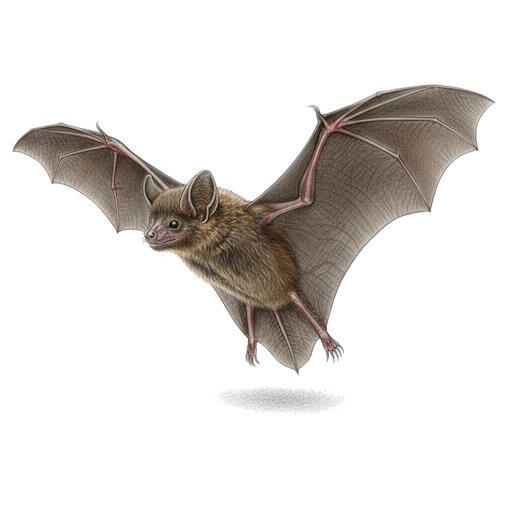
Mexican Free-tailed Bat
Classification
Mammalia > Chiroptera > Molossidae > Tadarida > T. brasiliensis
Native To
Conservation Status
Average Height
3 - 4 inches
(8 - 10 cm)
Average Weight
0.3 - 0.5 oz
(8 - 14 g)
Average Life Span
10 - 18 years
Gestation Period
90 days
Did You Know?
The Mexican Free-tailed Bat is known for forming the largest known concentrations of mammals, with colonies numbering in the millions.
They are incredibly fast flyers, reaching speeds of up to 100 miles per hour, making them one of the fastest animals on Earth.
These bats migrate long distances, often traveling hundreds of miles between their summer breeding grounds and wintering sites.
Mexican Free-tailed Bats primarily feed on insects, consuming tons of agricultural pests each night, which makes them valuable to farmers.
Their droppings, known as guano, are a rich fertilizer and were historically mined.
They have a unique tail that extends beyond the edge of the tail membrane, giving them their "free-tailed" name.
Mexican Free-tailed Bats use echolocation to navigate and hunt in the dark.
Photo Gallery
No images provided yet. Be the first to upload one!