Moose
The Moose (Alces alces) is the largest member of the deer family. It is a powerful and majestic animal, with males having massive, palm-shaped antlers that can span up to 6 feet wide.
The Moose is a herbivore, feeding on a variety of leaves, twigs, and aquatic vegetation. It is a solitary animal, spending its life in the boreal forests of North America, Europe, and Asia.
The Moose is a strong swimmer and is often found in and around lakes and ponds.
The Moose's massive size and powerful presence have made it a symbol of the wilderness and a true marvel of nature.
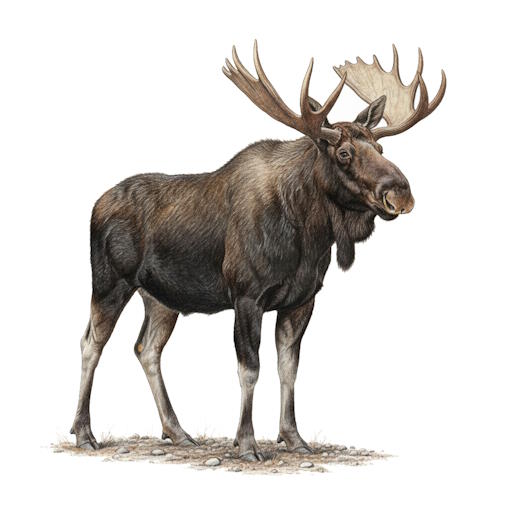
Moose
Classification
Mammalia > Artiodactyla > Cervidae > Alces > A. alces
Native To
Conservation Status
Average Height
5 - 6.5 feet
(1.5 - 2 m)
Average Weight
800 - 1,200 lbs
(360 - 540 kg)
Average Life Span
15 - 25 years
Gestation Period
240 - 250 days
Did You Know?
The Moose is the largest species in the deer family.
A male Moose can weigh over 1,500 pounds and stand over 6 feet tall at the shoulder.
Their antlers can spread up to 6 feet wide, making them the largest antlers of any living deer.
Moose are excellent swimmers and can hold their breath for up to 30 seconds underwater.
They can also dive to depths of 20 feet to feed on aquatic vegetation.
Despite their large size, Moose are surprisingly agile and can run up to 35 miles per hour.
They have a unique digestive system that allows them to eat tough woody plants.
A Moose's diet consists mainly of twigs, leaves, and bark, especially from willow and birch trees.
They are typically solitary animals, but sometimes groups can be seen at mineral licks.
Photo Gallery
No images provided yet. Be the first to upload one!