Okapi
The Okapi (Okapia johnstoni) is a unique and elusive mammal native to the rainforests of the Democratic Republic of Congo. It is a relative of the giraffe, but it has a much shorter neck.
The Okapi is easily recognizable by its beautiful, zebra-like striped legs and its reddish-brown coat. It is a solitary and diurnal animal.
The Okapi is a browser, feeding on a variety of leaves, buds, and fruits.
The Okapi is a near-threatened species, facing threats from habitat loss and poaching.
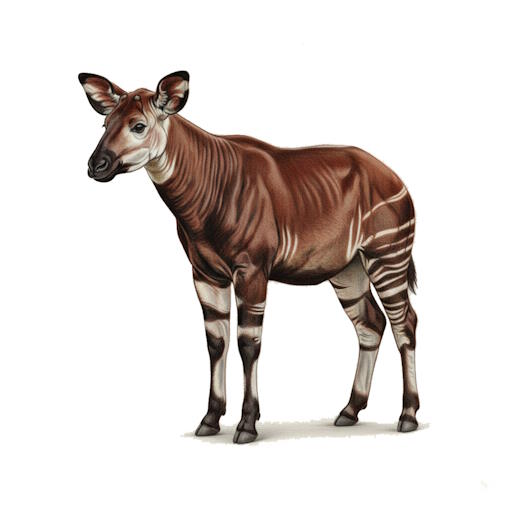
Okapi
Classification
Mammalia > Artiodactyla > Giraffidae > Okapia > O. johnstoni
Native To
Conservation Status
Average Height
5 feet
(1.5 m)
Average Weight
440 - 770 lbs
(200 - 350 kg)
Average Life Span
20 - 25 years
Gestation Period
420 - 450 days
Did You Know?
The Okapi is native to the Democratic Republic of Congo in Central Africa.
Despite its zebra-like stripes on its legs, the Okapi is actually more closely related to the giraffe.
It has a long, prehensile tongue (up to 18 inches!) that it uses to strip leaves and buds from trees and to clean its own eyelids and ears.
Okapis are solitary animals and are very elusive, making them difficult to spot in the wild.
They have oily, velvety fur that helps to repel water, keeping them dry in the rainforest.
Female Okapis communicate with their young using infrasound, which is too low for human ears to hear.
Photo Gallery
No images provided yet. Be the first to upload one!