Père David's Deer
Père David's Deer (Elaphurus davidianus), also known as the Milu, is a species of deer that was once native to China. It was driven to extinction in the wild, but a small population survived in European zoos. In a remarkable conservation success story, Père David's Deer have been reintroduced to the wild in China. The deer has a unique, long, and flexible neck and a short tail. It is a semi-aquatic species, spending a lot of time in and around water.
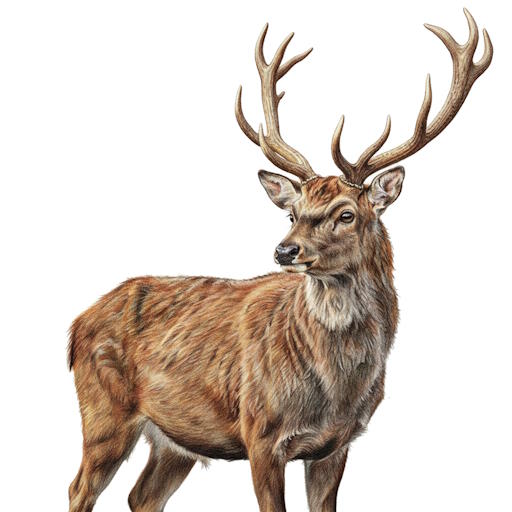
Père David's Deer
Classification
Mammalia > Artiodactyla > Cervidae > Elaphurus > E. davidianus
Native To
Conservation Status
Average Height
3.5 - 4 feet
(1.1 - 1.2 m)
Average Weight
300 - 450 lbs
(136 - 204 kg)
Average Life Span
15 - 20 years
Gestation Period
250 - 270 days
Did You Know?
The Père David's Deer is a unique deer species that was once extinct in the wild but has been reintroduced thanks to conservation efforts.
They are semi-aquatic and enjoy spending time in water, which is unusual for deer.
Père David's Deer have distinctive hooves that are well-suited for marshy environments.
Their antlers are quite unique, with backward-pointing tines that can fork multiple times.
The species is named after Father Armand David, a French missionary who first documented it in China in the 19th century.
They have a diet primarily consisting of grasses and aquatic plants.
Photo Gallery
No images provided yet. Be the first to upload one!