Puma
The Puma (Puma concolor), also known as the cougar or mountain lion, is a large cat species native to the Americas.
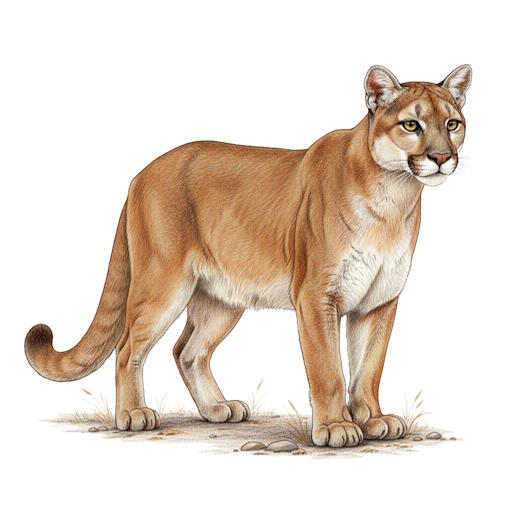
Puma
Native To
Conservation Status
Average Height
2 - 2.5 feet
(0.6 - 0.8 m)
Average Weight
100 - 200 lbs
(45 - 90 kg)
Average Life Span
10 - 12 years
Gestation Period
90 - 95 days
Diet
Carnivore (deer, elk, small mammals)
Social Structure
Solitary
Biomes
(And Habitats)
Desert and Arid and Rocky/Steep Habitats and Temperate Forest
(Deserts, Forests and Mountains)
Did You Know?
The Puma is also known by many other names, including cougar, mountain lion, and catamount.
Pumas have an incredibly wide distribution, found from Canada down to the southern Andes in South America, making them the most widespread wild land mammal in the Western Hemisphere.
They are solitary and territorial animals, usually only coming together to mate.
Pumas are skilled hunters, capable of taking down prey much larger than themselves, including deer.
Despite their large size, Pumas are not considered "big cats" (like lions or tigers) because they cannot roar; instead, they purr and make a variety of other vocalizations.
They are excellent jumpers and climbers, using their powerful legs to leap up to 18 feet vertically and their strong claws to scale trees.
A Puma's tail can be almost as long as its body, helping it with balance.
Photo Gallery
No images provided yet. Be the first to upload one!