Serval
The Serval Leptailurus serval is a medium-sized wild cat native to the grasslands and savannas of Africa. It is known for its slender body, long legs, and large, rounded ears.
The Serval's long legs and neck allow it to see over tall grasses, and its large ears help it to locate prey. The Serval is a highly skilled hunter, known for its ability to leap high into the air to catch birds and rodents. Its diet consists mainly of small animals, including rodents, birds, and insects.
Servals are solitary and territorial animals, and they are primarily nocturnal. They are highly adaptable and can be found in a variety of habitats, as long as there is a source of water nearby. While the
While the Serval is not currently considered endangered, it does face threats from habitat loss and illegal hunting.
The Serval's grace, agility, and unique appearance make it a true symbol of the African savanna.
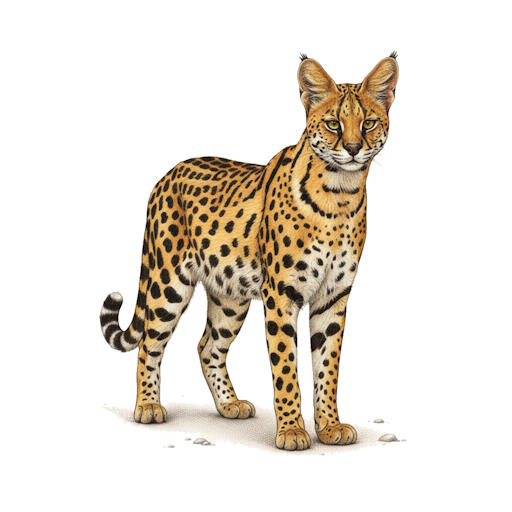
Serval
Native To
Conservation Status
Average Height
2 feet
(0.6 m)
Average Weight
20 - 40 lbs
(9 - 18 kg)
Average Life Span
10 - 15 years
Gestation Period
66 - 77 days
Did You Know?
The Serval is a medium-sized wild cat native to Africa, known for its long legs and large ears.
They are excellent hunters, with an incredible leaping ability, able to jump over 9 feet high to catch birds in mid-air.
Servals have the longest legs of any cat relative to their body size, which helps them see over tall grasses.
Their large ears are highly sensitive and can rotate independently, allowing them to pinpoint the location of prey underground.
Servals primarily prey on rodents, birds, and small reptiles, and are highly successful hunters.
They are solitary animals, only coming together for mating.
Servals are often found near water sources in savannas and grasslands.
Photo Gallery
No images provided yet. Be the first to upload one!