Smooth Newt
The Smooth Newt Lissotriton vulgaris is a small amphibian species native to Europe. It is known for its smooth, olive-brown skin and its ability to live both on land and in water.
During the breeding season, the male Smooth Newt develops a wavy crest on its back and tail, and its colors become more vibrant. It performs a unique and elaborate courtship display, where it wiggles its tail to waft pheromones towards the female.
Smooth Newts are an important part of their ecosystem, feeding on a wide variety of invertebrates. They are a valuable indicator species, meaning their presence or absence can be used to assess the health of their wetland habitat. While they are not considered endangered, they do face threats from habitat loss and pollution.
The Smooth Newt's ability to live in a variety of environments and its unique life cycle make it a fascinating and important animal.
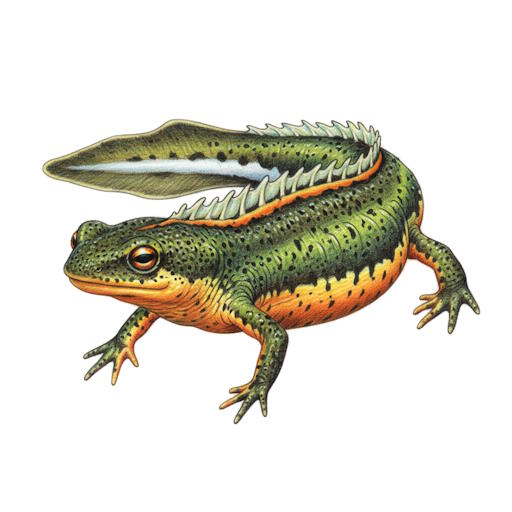
Smooth Newt
Classification
Amphibia > Caudata > Salamandridae > Lissotriton > L. vulgaris
Native To
Conservation Status
Average Height
3 - 4 inches
(8 - 10 cm)
Average Weight
1 - 2 oz
(28 - 57 g)
Average Life Span
6 - 10 years
Gestation Period
15 - 20 days
Did You Know?
The Smooth Newt is a small amphibian found across much of Europe.
During the breeding season, males develop a prominent crest along their back and tail.
They spend most of their lives on land but return to water to breed.
Smooth Newts are carnivorous, feeding on small invertebrates like insects, worms, and slugs.
Their skin is often mottled with spots and can vary in color from olive green to brown.
They can regenerate lost limbs, tails, and even parts of their internal organs.
Smooth Newts are an important part of their ecosystem, both as predators and as prey for larger animals.
Photo Gallery
No images provided yet. Be the first to upload one!