Snowshoe Hare
The Snowshoe Hare Lepus americanus is a species of hare native to the boreal forests of North America. It is known for its large, furry hind feet, which act like snowshoes to help it walk on top of the snow.
The Snowshoe Hare is also famous for its seasonal coat change. In the summer, its coat is a camouflaged brown, and in the winter, it turns a pure white. This change helps it to blend in with its environment and avoid predators.
The Snowshoe Hare is a crucial part of the forest ecosystem, as it is a primary food source for a variety of predators, including lynx, foxes, and owls. The populations of the Snowshoe Hare and the Canada Lynx are closely linked in a classic predator-prey cycle. The Snowshoe Hare is a true master of camouflage and a symbol of the wild, snowy forests of North America.
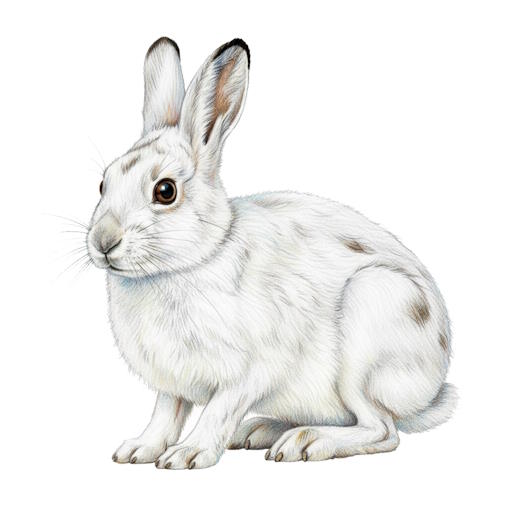
Snowshoe Hare
Classification
Mammalia > Lagomorpha > Leporidae > Lepus > L. americanus
Native To
Conservation Status
Average Height
1.5 feet
(0.5 m)
Average Weight
2 - 4 lbs
(0.9 - 1.8 kg)
Average Life Span
3 - 5 years
Gestation Period
35 - 38 days
Did You Know?
The Snowshoe Hare is known for its large hind feet, which are covered in fur and act like snowshoes, helping it move easily over snow.
Their fur changes color with the seasons, from brown in summer to white in winter, providing excellent camouflage against predators.
Snowshoe Hares are primarily nocturnal and herbivorous, feeding on a variety of plants, twigs, and bark.
They can run at speeds of up to 27 miles per hour and are very agile, allowing them to escape predators like lynx, bobcats, and owls.
The population of Snowshoe Hares fluctuates in cycles, often tied to the population cycles of their primary predators, especially the Canada Lynx.
They communicate through thumping their hind feet and various vocalizations, including squeals and grunts.
Snowshoe Hares do not hibernate; they remain active throughout the winter.
Photo Gallery
No images provided yet. Be the first to upload one!