Spotted Salamander
The Spotted Salamander Ambystoma maculatum is a species of mole salamander native to the eastern United States and Canada. It is a medium-sized amphibian known for its striking black body with bright yellow or orange spots.
The Spotted Salamander is a secretive and nocturnal animal, spending most of its life hidden underground in burrows. It is most famously known for its unique symbiotic relationship with a species of algae. The algae lives inside the salamander's egg casings and even inside the salamander's cells, providing it with oxygen and nutrients. This is one of the only known examples of a vertebrate living in a symbiotic relationship with an algae. The Spotted Salamander is an important part of its ecosystem, helping to control insect populations.
The Spotted Salamander's unique symbiotic relationship and beautiful appearance make it a fascinating and important animal.
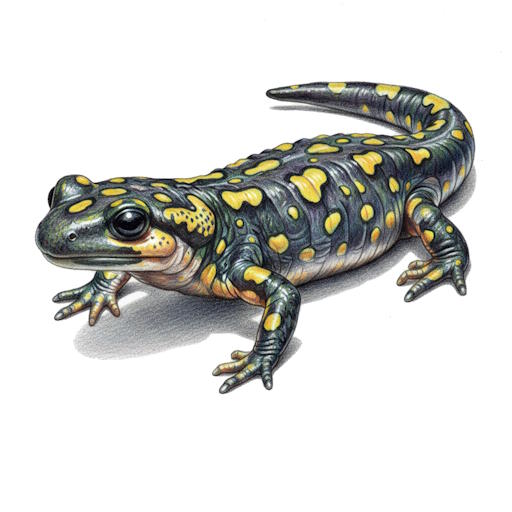
Spotted Salamander
Classification
Amphibia > Caudata > Ambystomatidae > Ambystoma > A. maculatum
Native To
Conservation Status
Average Height
6 - 8 inches
(15 - 20 cm)
Average Weight
1 - 2 oz
(28 - 57 g)
Average Life Span
20 years
Gestation Period
4 - 7 weeks
Did You Know?
The Spotted Salamander is a striking amphibian known for its bright yellow or orange spots against a dark body.
They spend most of their lives underground or under logs, only emerging to breed.
Spotted Salamanders are crucial to forest ecosystems, helping control insect populations.
They can live for over 20 years in the wild!
These salamanders have a unique symbiotic relationship with algae that live inside their eggs, providing oxygen to the developing embryos.
Photo Gallery
No images provided yet. Be the first to upload one!