Spotted Skunk
The Spotted Skunk Spilogale is a genus of skunks native to North and Central America. There are several species of spotted skunks, all of which are known for their black and white striped and spotted coat.
The Spotted Skunk is a small and agile animal, much more slender than its larger relatives, the striped skunk. It is known for its unique "handstand" defense. When threatened, it will perform a handstand, raising its tail and aiming its spray at the predator. This display is a warning to the predator before the skunk releases its powerful and foul-smelling spray.
Spotted Skunks are Omnivore, feeding on a wide variety of foods, including insects, small rodents, and fruits. The Spotted Skunk's unique defense mechanism and its small size make it a fascinating and important animal.
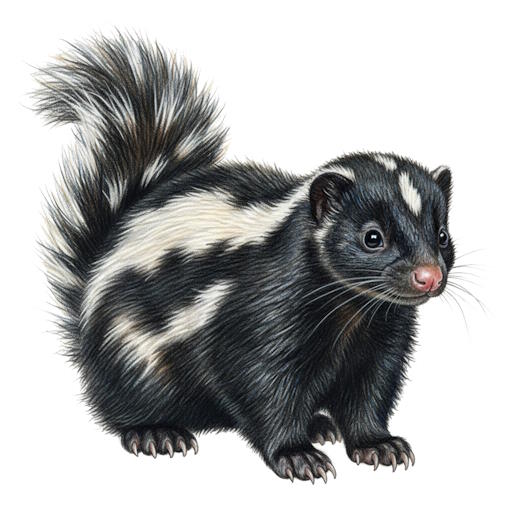
Spotted Skunk
Classification
Mammalia > Carnivora > Mephitidae > Spilogale > S. putorius
Native To
Conservation Status
Average Height
1 - 1.5 feet
(0.3 - 0.5 m)
Average Weight
1 - 2.5 lbs
(0.5 - 1.1 kg)
Average Life Span
2 - 4 years
Gestation Period
28 - 31 days
Diet
Omnivore (insects, rodents, fruits)
Social Structure
Solitary
Biomes
(And Habitats)
Desert and Arid and Grassland and Savanna and Temperate Forest
(Deserts, Forests and Grasslands)
Did You Know?
The Spotted Skunk is known for its unique hand-stand before spraying its defensive musk.
They are much smaller and more agile than other skunk species, often climbing trees.
Spotted Skunks are primarily nocturnal and omnivorous, eating insects, small rodents, fruits, and berries.
There are several species of Spotted Skunk found across North America.
They can deliver their spray with surprising accuracy up to 15 feet away!
Photo Gallery
No images provided yet. Be the first to upload one!