Squid
The Squid is a marine invertebrate that is a member of the cephalopod family, which also includes octopuses and cuttlefish. There are several hundred species of squid, ranging in size from the tiny bobtail squid to the massive colossal squid.
Squids are known for their unique anatomy, which includes a streamlined body, eight arms, two longer tentacles, and a pair of fins. They are masters of camouflage, capable of changing their color and texture in an instant to blend in with their surroundings. Squids are a vital part of the marine ecosystem, as they are a primary food source for a variety of predators, including sharks, dolphins, and whales. They are also a highly intelligent animal, with a complex nervous system.
The Squid's unique anatomy and intelligence make it a fascinating and important animal of the sea.
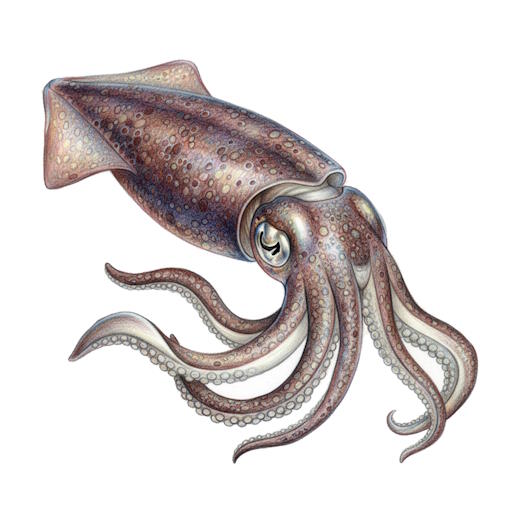
Squid
Classification
Cephalopoda > Teuthida > NA > Loligo > L. vulgaris
Native To
Conservation Status
Average Height
1 - 1.5 feet
(0.3 - 0.5 m)
Average Weight
1 - 2 lbs
(0.5 - 0.9 kg)
Average Life Span
1 - 2 years
Gestation Period
NA
Did You Know?
The Squid is a cephalopod, a type of mollusk that also includes octopuses and cuttlefish.
They have three hearts: two pump blood through their gills, and one circulates blood to the rest of their body.
Squid can change their color and skin texture almost instantly, allowing them to camouflage or communicate.
They have the largest eyes in the animal kingdom relative to their body size, with some colossal squid having eyes the size of basketballs!
Instead of blood, Squid have a blue-green hemocyanin that carries oxygen.
They move by jet propulsion, squirting water through a funnel.
Photo Gallery
No images provided yet. Be the first to upload one!