Steppe Bison
The Steppe Bison Bison priscus was a large, prehistoric species of bison that lived during the Ice Age. It was a massive herbivore, with large horns that could span up to 4 feet across.
The Steppe Bison was a widespread species, with a range that covered much of North America, Europe, and Asia. It was a primary food source for a variety of Ice Age predators, including saber-toothed cats, cave lions, and humans.
The Steppe Bison is an ancestor of the modern American Bison and the European Bison.
The extinction of the Steppe Bison is thought to have been caused by a combination of climate change and human hunting. The Steppe Bison is a powerful reminder of the incredible animals that once roamed our planet and the rich history of the Ice Age.
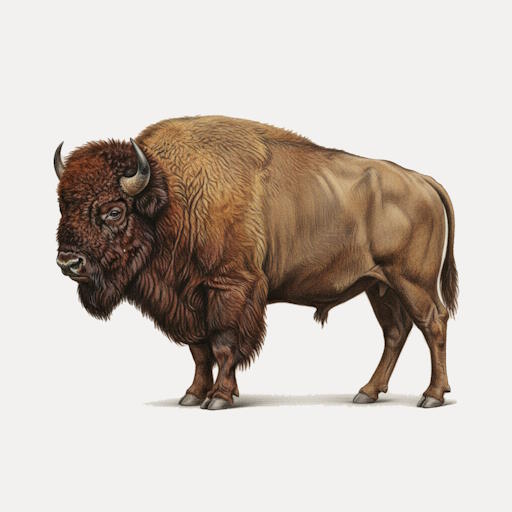
Steppe Bison
Classification
Mammalia > Artiodactyla > Bovidae > Bison > B. priscus
Conservation Status
Average Height
6 - 7 feet
(1.8 - 2.1 m)
Average Weight
2,000 - 3,000 lbs
(900 - 1,360 kg)
Average Life Span
15 - 20 years
Gestation Period
285 days
Did You Know?
The Steppe Bison was a large species of bison that roamed across much of North America, Europe, and Asia during the Ice Age.
It was much larger than modern bison, with horns that could span up to 8 feet wide.
Despite its massive size, the Steppe Bison was likely prey for large predators like saber-toothed cats and cave lions.
Fossil evidence suggests that the Steppe Bison was a grazer, feeding primarily on grasses and other vegetation.
Cave paintings created by early humans often depict the Steppe Bison, indicating its importance in their lives and environment.
Photo Gallery
No images provided yet. Be the first to upload one!