Walrus
The Walrus Odobenus rosmarus is a large marine mammal native to the Arctic Ocean. It is known for its massive body, its long, white tusks, and its loud vocalizations. The tusks are present in both males and females and are used for a variety of purposes, including hauling out of the water, digging for food, and for social display.
The Walrus is a highly social animal that lives in large herds. Its diet consists mainly of shellfish, which it can find by digging in the seabed with its snout. The Walrus is a threatened species, facing threats from climate change, which is causing the sea ice to melt.
The Walrus is a true icon of the Arctic and a powerful reminder of the impact of climate change on the planet.
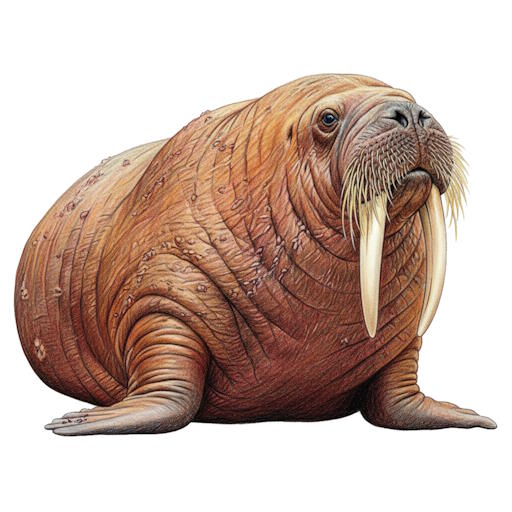
Walrus
Classification
Mammalia > Carnivora > Odobenidae > Odobenus > O. rosmarus
Native To
Conservation Status
Average Height
9 - 12 feet
(2.7 - 3.7 m)
Average Weight
1,700 - 4,400 lbs
(770 - 2,000 kg)
Average Life Span
40 - 50 years
Gestation Period
450 days
Did You Know?
The Walrus is a large marine mammal recognized by its prominent tusks, whiskers, and bulkiness.
Both male and female Walruses have tusks, which are elongated canine teeth that can grow up to 3 feet long and are used for pulling themselves onto ice, defense, and breaking through ice.
Walruses are highly social animals and often gather in large herds on ice floes or coastal beaches.
They can hold their breath for up to 30 minutes and dive to depths of 300 feet in search of food, primarily clams and other benthic invertebrates.
The scientific name for the Walrus, Odobenus rosmarus, means "one who walks with teeth."
Photo Gallery
No images provided yet. Be the first to upload one!