Warthog
The Warthog Phacochoerus africanus is a wild member of the pig family that is native to the grasslands and savannas of Africa. It is known for its unique, wart-like protuberances on its face, which are a type of protective padding.
The Warthog has two pairs of tusks, which it uses for fighting and digging. Warthogs are highly adaptable animals and can be found in a variety of habitats, as long as there is a source of water and a place to dig a burrow.
The Warthog is a herbivore, feeding on a wide variety of grasses, roots, and bulbs. While the Warthog is not considered endangered, it does face threats from habitat loss and human-wildlife conflict.
The Warthog's unique appearance and its powerful build make it a fascinating and important animal of the African savanna.
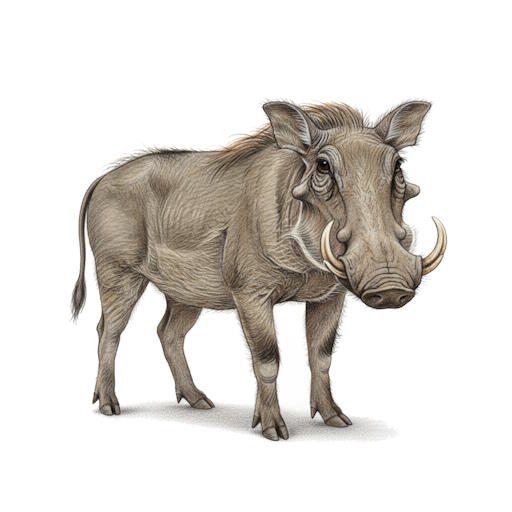
Warthog
Classification
Mammalia > Artiodactyla > Suidae > Phacochoerus > P. africanus
Native To
Conservation Status
Average Height
2 - 2.5 feet
(0.6 - 0.8 m)
Average Weight
130 - 250 lbs
(59 - 113 kg)
Average Life Span
15 - 20 years
Gestation Period
160 - 175 days
Did You Know?
The Warthog gets its name from the "warts" or facial growths on its head, which are actually thick protective pads.
Despite their somewhat fierce appearance, Warthogs are primarily herbivores, feasting on grasses, roots, and berries.
When startled or threatened, Warthogs will often run with their tails held straight up like an antenna!
They are excellent diggers, using their tough snouts and tusks to unearth food and create burrows for shelter.
Warthogs love to wallow in mud or water, which helps them cool down and protect their skin from insects and the sun.
Photo Gallery
No images provided yet. Be the first to upload one!