White-tailed Deer
The White-tailed Deer Odocoileus virginianus is a common and widespread species of deer native to North, Central, and South America. It is known for its reddish-brown summer coat and its grayish-brown winter coat, as well as its distinctive white tail, which it raises as a warning when it is startled.
The White-tailed Deer is a highly adaptable animal that can be found in a variety of habitats, including forests, grasslands, and even suburban areas. It is a browser, feeding on a wide variety of leaves, shoots, and twigs.
The White-tailed Deer is a common sight in many parts of the Americas and is a true symbol of the wild, open spaces of the continent.
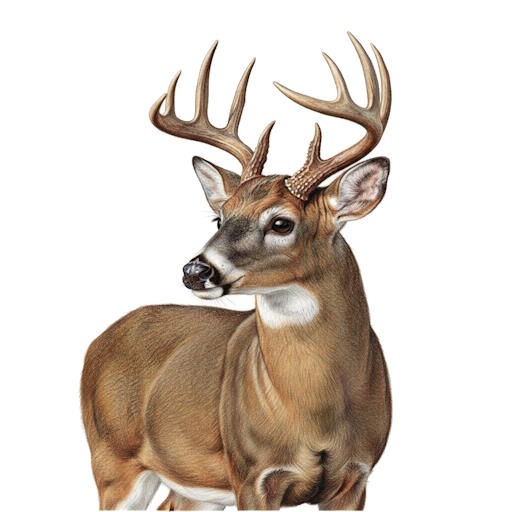
White-tailed Deer
Classification
Mammalia > Artiodactyla > Cervidae > Odocoileus > O. virginianus
Native To
Conservation Status
Average Height
3 - 4 feet
(0.9 - 1.2 m)
Average Weight
100 - 300 lbs
(45 - 136 kg)
Average Life Span
6 - 14 years
Gestation Period
201 days
Did You Know?
The White-tailed Deer is named for the white underside of its tail, which it flashes as a warning signal when it senses danger.
They are incredibly agile and can run at speeds up to 30 miles per hour and jump over 10 feet high.
Male White-tailed Deer (bucks) grow and shed antlers every year, with antler size often indicating age and health.
They are herbivores and their diet primarily consists of leaves, twigs, fruits, and nuts.
Fawns, or baby White-tailed Deer, are born with white spots that help them camouflage in dappled sunlight, protecting them from predators.
White-tailed Deer are adaptable and can be found in a wide variety of habitats, from dense forests to suburban areas.
Photo Gallery
No images provided yet. Be the first to upload one!