Wild Yak
The Wild Yak Bos mutus is a massive bovid native to the high-altitude grasslands of the Himalayas and the Tibetan Plateau. It is a powerful and resilient animal, known for its thick, shaggy coat, which helps it to survive in the extreme cold.
The Wild Yak is a herbivore, feeding on a wide variety of grasses and other plants. It is a social animal that lives in herds. The Wild Yak is a vulnerable species, facing threats from hunting and habitat loss.
The Wild Yak's powerful build and its life in the high-altitude grasslands make it a true symbol of the wild, untamed mountains of Central Asia.
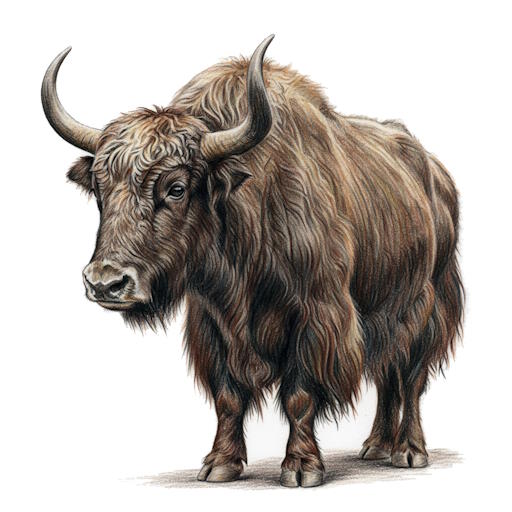
Wild Yak
Classification
Mammalia > Artiodactyla > Bovidae > Bos > B. mutus
Native To
Conservation Status
Average Height
5 - 6 feet
(1.5 - 1.8 m)
Average Weight
1,500 - 2,200 lbs
(680 - 1,000 kg)
Average Life Span
15 - 20 years
Gestation Period
250 - 260 days
Did You Know?
The Wild Yak is a large, wild bovine found in the Himalayas and on the Tibetan Plateau.
They have a thick, shaggy coat that helps them survive in extremely cold and harsh high-altitude environments.
Wild Yaks can weigh over 2,200 pounds and stand over 6 feet tall at the shoulder.
Both male and female Wild Yaks have impressive horns that can grow over three feet long.
They are herbivores, primarily grazing on grasses and other high-altitude vegetation.
Wild Yaks are social animals and live in herds, which can consist of hundreds of individuals.
They are incredibly strong swimmers and can cross wide rivers.
Despite their massive size, Wild Yaks are remarkably agile on rocky and steep terrain.
The Wild Yak is considered a vulnerable species, facing threats from hunting and habitat loss.
Photo Gallery
No images provided yet. Be the first to upload one!