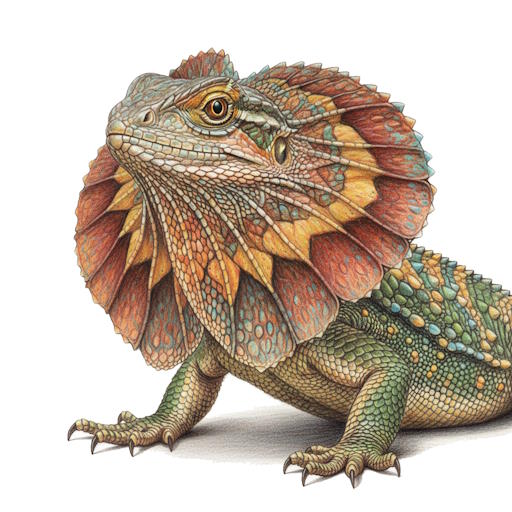
Animal Family: Agamidae
About the Agamidae Family
The parent order is Squamata.
Dive into the diverse and captivating world of the Agamidae family, a remarkable group of lizards commonly known as agamids or dragon lizards. Found across a wide range of habitats in Africa, Asia, and Australia, these lizards are celebrated for their incredible adaptability, varied appearances, and fascinating behaviors.
What makes Agamidae truly unique is their remarkable evolutionary radiation, resulting in a vast array of species with diverse adaptations. Many agamids are masters of camouflage, blending seamlessly into their surroundings, while others display vibrant colors for communication or territorial defense. They are typically diurnal, relying on keen eyesight to hunt insects and other small prey, though some species are herbivorous or omnivorous.
Members of the Agamidae family share several common traits. Most possess a robust body with strong limbs, making them agile climbers and runners. Their skin is often covered in scales, which can be smooth or highly keeled, sometimes adorned with crests, spines, or gular folds. A notable characteristic is their acrodont dentition, where teeth are fused to the top of the jawbone. Many species are also known for their impressive display behaviors, involving head bobs, push-ups, and changes in coloration, particularly during courtship or territorial disputes.
Other Orders
There are many different orders based upon their class. To learn more about classification orders, click here.
Genera within Agamidae
Within the order of Agamidae, there are one or more genus of animals that share common characteristics and traits.
Each genus represents a more specific grouping within the order, highlighting the diversity and specialization of species that have adapted to various ecological niches. Below is a list of genera that fall under this order, showcasing the rich variety of life forms classified within this taxonomic category.
Chlamydosaurus
Animals in the family of Agamidae
Click on an image to learn more about one of the animals.