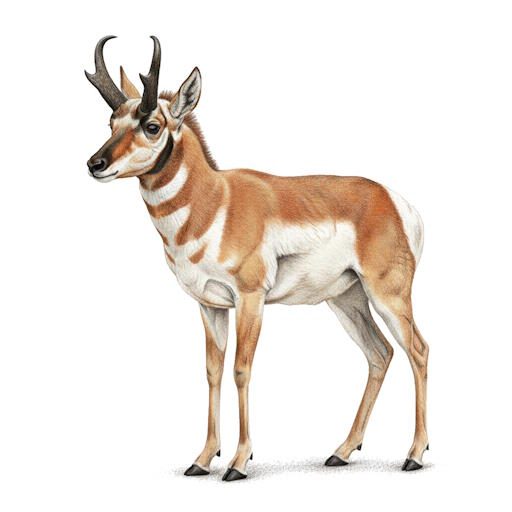
Animal Family: Antilocapridae
About the Antilocapridae Family
The parent order is Artiodactyla.
Step into the extraordinary world of the Antilocapridae family, an ancient and unique group within the animal kingdom, best known for its sole surviving member: the pronghorn (Antilocapra americana). Often mistaken for an antelope, the pronghorn stands alone as the fastest land mammal in North America and possesses a truly distinctive set of characteristics that set its family apart.
What makes Antilocapridae truly unique is its evolutionary isolation and specialized adaptations. Unlike true antelopes, the pronghorn sheds its horn sheaths annually, a feature shared with deer (Cervidae) but not found in bovids (Bovidae), which have permanent horns. This unique combination of bone-cored, branching horns with annually shed keratinous sheaths is a hallmark of the Antilocapridae. Furthermore, their incredible speed, reaching up to 60 miles per hour, is attributed to their exceptionally large lungs, heart, and windpipe, alongside their unique muscular structure and specialized foot anatomy, making them perfectly adapted for open, vast landscapes.
Common traits among current and extinct members of the Antilocapridae family include a relatively slender build, long legs, and a keen sense of sight, all contributing to their remarkable agility and ability to evade predators. Their dentition is adapted for a herbivorous diet, allowing them to efficiently graze on various plant materials found in their arid and semi-arid habitats. While only one species remains today, the fossil record reveals a diversity of forms within this family, each sharing the fundamental anatomical innovations that allowed them to thrive in North American grasslands for millions of years.
Other Orders
There are many different orders based upon their class. To learn more about classification orders, click here.
Genera within Antilocapridae
Within the order of Antilocapridae, there are one or more genus of animals that share common characteristics and traits.
Each genus represents a more specific grouping within the order, highlighting the diversity and specialization of species that have adapted to various ecological niches. Below is a list of genera that fall under this order, showcasing the rich variety of life forms classified within this taxonomic category.
Antilocapra
Animals in the family of Antilocapridae
Click on an image to learn more about one of the animals.