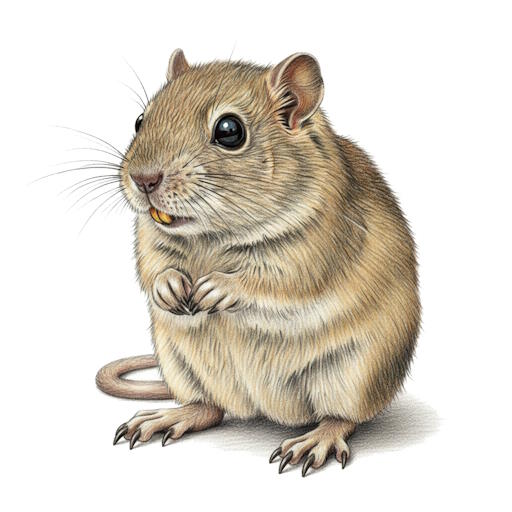
Animal Family: Ctenomyidae
About the Ctenomyidae Family
The parent order is Rodentia.
Delve into the fascinating world of the Ctenomyidae family, a group of rodents exclusively found in South America, commonly known as tuco-tucos. These subterranean specialists are a remarkable example of adaptation to a fossorial lifestyle, making them truly unique within the rodent order.
What sets Ctenomyidae apart is their extreme specialization for burrowing. Tuco-tucos possess a robust, cylindrical body shape, short powerful limbs, and strong claws, all designed for efficient excavation. Their large incisors, which protrude even when their mouths are closed, are also utilized for digging, giving them their onomatopoeic name from the sound they make while burrowing ("tuc-tuc-tuc").
Animals within the Ctenomyidae family share several common traits beyond their burrowing prowess. They are typically herbivorous, feeding on roots, tubers, and other underground plant parts, as well as surface vegetation close to their burrows. While primarily solitary, some species may exhibit limited social behaviors. Their highly developed auditory and olfactory senses compensate for their reduced vision, crucial for navigating their dark underground environments and detecting predators.
Other Orders
There are many different orders based upon their class. To learn more about classification orders, click here.
Genera within Ctenomyidae
Within the order of Ctenomyidae, there are one or more genus of animals that share common characteristics and traits.
Each genus represents a more specific grouping within the order, highlighting the diversity and specialization of species that have adapted to various ecological niches. Below is a list of genera that fall under this order, showcasing the rich variety of life forms classified within this taxonomic category.
Ctenomys
Animals in the family of Ctenomyidae
Click on an image to learn more about one of the animals.