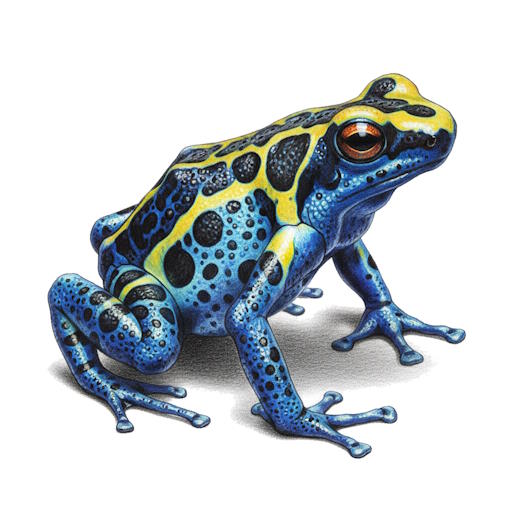
Animal Family: Dendrobatidae
About the Dendrobatidae Family
The parent order is Anura.
Step into the vibrant and often astonishing world of the Dendrobatidae family, widely recognized as poison dart frogs. These small, brilliantly colored amphibians are not only visually striking but also possess a unique and highly specialized set of characteristics that distinguish them within the animal kingdom.
What makes Dendrobatidae truly unique is their remarkable chemical defense mechanism. Many species within this family synthesize potent toxins, accumulated from their diet of ants, mites, and other arthropods, which they secrete through their skin. This makes them largely unpalatable and often dangerous to predators, a powerful evolutionary adaptation signaled by their vivid warning coloration, known as aposematism.
Common traits among animals in the Dendrobatidae family include their relatively small size, typically ranging from 1 to 6 centimeters. Their skin is smooth and often adorned with intricate patterns of bright colors such as blue, yellow, red, and green. They are primarily diurnal, active during the day, and are found in humid, tropical environments, predominantly in Central and South America. These frogs exhibit diverse reproductive strategies, with many species showing significant parental care, including carrying tadpoles on their backs to small pools of water.
Other Orders
There are many different orders based upon their class. To learn more about classification orders, click here.
Genera within Dendrobatidae
Within the order of Dendrobatidae, there are one or more genus of animals that share common characteristics and traits.
Each genus represents a more specific grouping within the order, highlighting the diversity and specialization of species that have adapted to various ecological niches. Below is a list of genera that fall under this order, showcasing the rich variety of life forms classified within this taxonomic category.
Dendrobates
Animals in the family of Dendrobatidae
Click on an image to learn more about one of the animals.