Animal Family: Hylobatidae
About the Hylobatidae Family
The parent order is Primates.
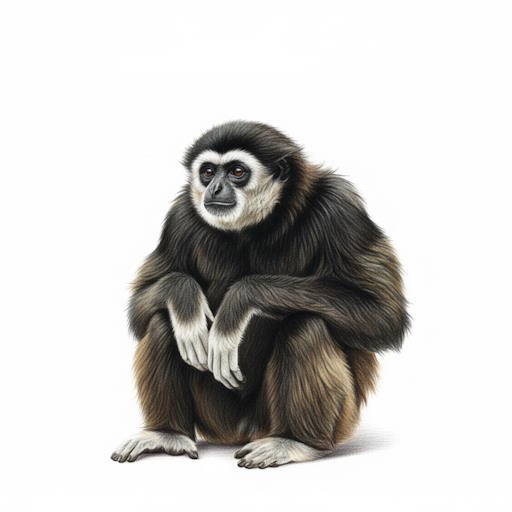
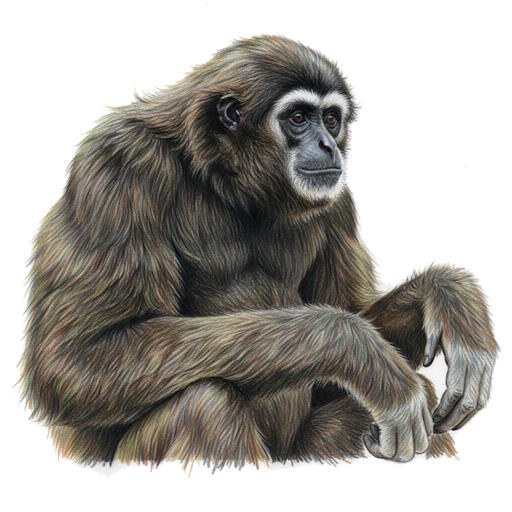
Delve into the fascinating world of the Hylobatidae family, commonly known as gibbons. These remarkable primates are celebrated for their exceptional agility and unique form of locomotion, making them a captivating subject within primatology.
What truly sets Hylobatidae apart is their unparalleled mastery of brachiation, a specialized method of arboreal locomotion where they swing from branch to branch using their long, powerful arms. This adaptation has led to their distinctive long limbs and short hind legs, allowing for incredible speed and grace through the forest canopy. They are also unique for their monogamous social structures and complex, melodious vocalizations used for territorial defense and pair bonding.
Animals within the Hylobatidae family share several common traits, including their relatively small size compared to other apes, a lack of a tail, and a highly arboreal lifestyle. Their diets primarily consist of fruits, leaves, and insects, reflecting their adaptations to forest environments. Furthermore, gibbons are known for their strong family bonds and elaborate duets sung by mating pairs, a characteristic that further emphasizes their unique position among primates.
Other Orders
There are many different orders based upon their class. To learn more about classification orders, click here.
Genera within Hylobatidae
Within the order of Hylobatidae, there are one or more genus of animals that share common characteristics and traits.
Each genus represents a more specific grouping within the order, highlighting the diversity and specialization of species that have adapted to various ecological niches. Below is a list of genera that fall under this order, showcasing the rich variety of life forms classified within this taxonomic category.
Hoolock
Hylobates
Symphalangus
Animals in the family of Hylobatidae
Click on an image to learn more about one of the animals.