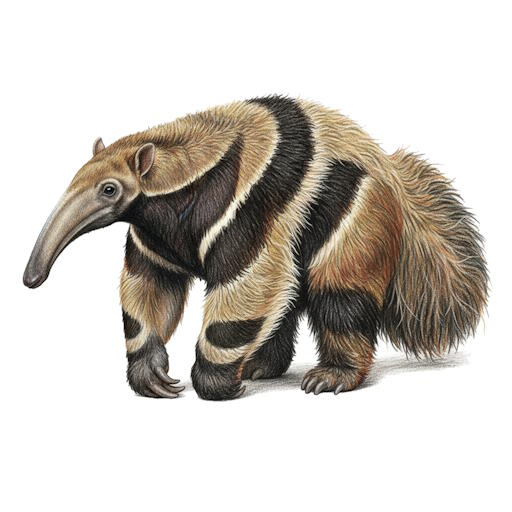
Animal Family: Myrmecophagidae
About the Myrmecophagidae Family
The parent order is Pilosa.
Delve into the fascinating world of the Myrmecophagidae family, more commonly known as the anteaters. These unique mammals are instantly recognizable for their specialized adaptations for myrmecophagy – a diet primarily consisting of ants and termites.
What makes Myrmecophagidae truly unique is their extreme specialization. They possess long, tubular snouts, incredibly long and sticky tongues that can extend remarkably far, and powerful claws perfectly suited for tearing open insect nests. Unlike many other mammals, they lack teeth, instead relying on their muscular stomachs and ingested grit to grind their insect meals. Their strong sense of smell is crucial for locating their hidden prey.
Common traits among animals in this family include their distinctive appearance, their exclusive diet of insects, and their generally solitary nature. From the giant anteater to the silky anteater, each species exhibits variations in size and habitat, but all share the fundamental adaptations that define them as specialized insectivores. Their unique role in controlling insect populations makes them vital components of their ecosystems across Central and South America.
Other Orders
There are many different orders based upon their class. To learn more about classification orders, click here.
Genera within Myrmecophagidae
Within the order of Myrmecophagidae, there are one or more genus of animals that share common characteristics and traits.
Each genus represents a more specific grouping within the order, highlighting the diversity and specialization of species that have adapted to various ecological niches. Below is a list of genera that fall under this order, showcasing the rich variety of life forms classified within this taxonomic category.
Myrmecophaga
Animals in the family of Myrmecophagidae
Click on an image to learn more about one of the animals.