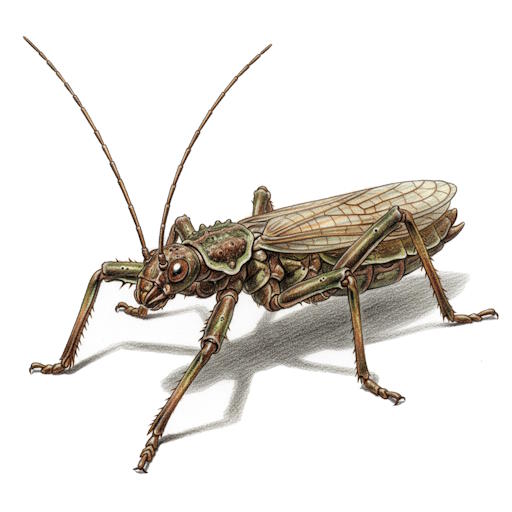
Animal Family: Phasmatidae
About the Phasmatidae Family
The parent order is Phasmatodea.
Step into the intriguing world of the Phasmatidae family, a remarkable group of insects universally known as stick insects or leaf insects. These masters of camouflage are celebrated for their extraordinary ability to mimic their environment, making them virtually indistinguishable from the foliage they inhabit.
What truly sets Phasmatidae apart is their unparalleled evolutionary adaptation for crypsis. Their bodies are meticulously designed to blend seamlessly with twigs, leaves, and bark, a defense mechanism that helps them evade predators. This mimicry is not just visual; some species can even sway gently to imitate a branch moving in the wind.
Members of the Phasmatidae family share several common traits. They are typically elongated and cylindrical, though some species are flattened and broad, resembling leaves. Their coloration ranges from greens and browns to grays, often with intricate patterns that further enhance their camouflage. All stick and leaf insects are herbivores, primarily feeding on the leaves of various plants. They are also hemimetabolous insects, meaning they undergo incomplete metamorphosis with nymphal stages gradually developing into adults without a pupal stage.
Other Orders
There are many different orders based upon their class. To learn more about classification orders, click here.
Genera within Phasmatidae
Within the order of Phasmatidae, there are one or more genus of animals that share common characteristics and traits.
Each genus represents a more specific grouping within the order, highlighting the diversity and specialization of species that have adapted to various ecological niches. Below is a list of genera that fall under this order, showcasing the rich variety of life forms classified within this taxonomic category.
Dryococelus
Animals in the family of Phasmatidae
Click on an image to learn more about one of the animals.