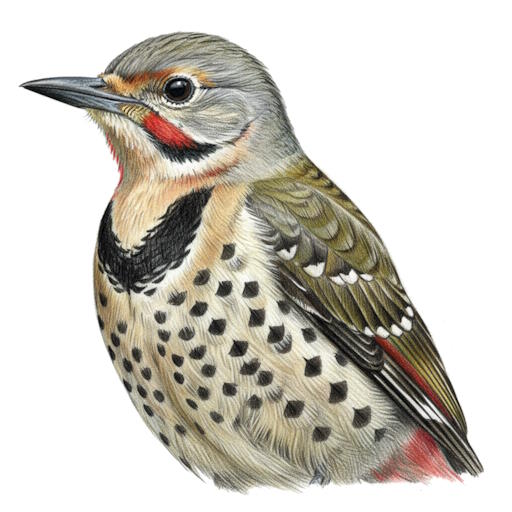
Animal Family: Picidae
About the Picidae Family
The parent order is Piciformes.
Delve into the vibrant world of the Picidae family, a diverse and globally distributed group of birds universally recognized as woodpeckers, flickers, and sapsuckers. This fascinating family stands out for its remarkable adaptations to an arboreal lifestyle, primarily centered around their unique methods of foraging and communication.
What makes Picidae truly unique is their specialized anatomical features designed for excavating wood. Their strong, sharp beaks act like chisels, allowing them to drill into trees to find insects or create nesting cavities. This is coupled with a thick skull and a highly developed hyoid apparatus, which acts as a shock absorber, protecting their brains from the repetitive impact. Furthermore, many species possess a long, barbed tongue that can extend far beyond the beak to extract prey from deep crevices.
Common traits among animals in the Picidae family include zygodactyl feet (two toes pointing forward and two backward), which provide excellent grip on tree trunks, and stiff tail feathers that act as a prop, providing stability while climbing and hammering. Their diet primarily consists of insects found under bark, but many also consume sap, nuts, and fruits. Communication within the family often involves drumming on resonant surfaces, serving as a territorial display or a way to attract mates.
Other Orders
There are many different orders based upon their class. To learn more about classification orders, click here.
Genera within Picidae
Within the order of Picidae, there are one or more genus of animals that share common characteristics and traits.
Each genus represents a more specific grouping within the order, highlighting the diversity and specialization of species that have adapted to various ecological niches. Below is a list of genera that fall under this order, showcasing the rich variety of life forms classified within this taxonomic category.
Colaptes
Animals in the family of Picidae
Click on an image to learn more about one of the animals.