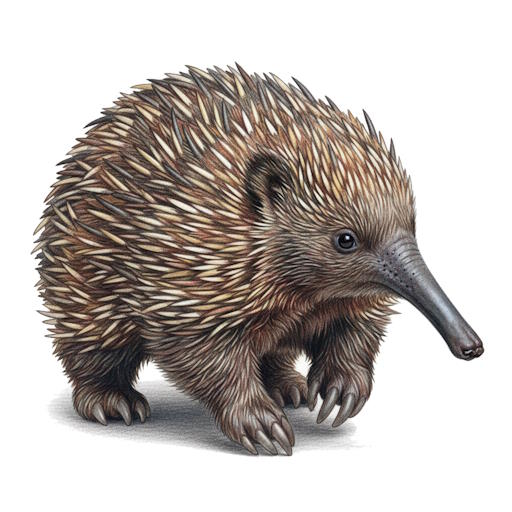
Animal Family: Tachyglossidae
About the Tachyglossidae Family
The parent order is Monotremata.
Step into the remarkable world of the Tachyglossidae family, an ancient and unique group within the animal kingdom, commonly known as echidnas or spiny anteaters. These fascinating mammals are exclusive to Australia and New Guinea, standing out as one of only two living families of monotremes, alongside the platypus.
What makes Tachyglossidae truly unique is their blend of reptilian and mammalian characteristics. As monotremes, they are egg-laying mammals, a trait shared with reptiles and birds, but they nurse their young with milk, a defining mammalian feature. Their bodies are covered in distinctive spines, offering protection, and they possess a long, sticky tongue perfectly adapted for their insectivorous diet of ants and termites. Echidnas are also known for their powerful digging claws, which they use to unearth food and create burrows, and their ability to regulate their body temperature, despite being less precise than placental mammals or marsupials. Their solitary nature and nocturnal habits further contribute to their unique ecological niche.
Other Orders
There are many different orders based upon their class. To learn more about classification orders, click here.
Genera within Tachyglossidae
Within the order of Tachyglossidae, there are one or more genus of animals that share common characteristics and traits.
Each genus represents a more specific grouping within the order, highlighting the diversity and specialization of species that have adapted to various ecological niches. Below is a list of genera that fall under this order, showcasing the rich variety of life forms classified within this taxonomic category.
Tachyglossus
Animals in the family of Tachyglossidae
Click on an image to learn more about one of the animals.