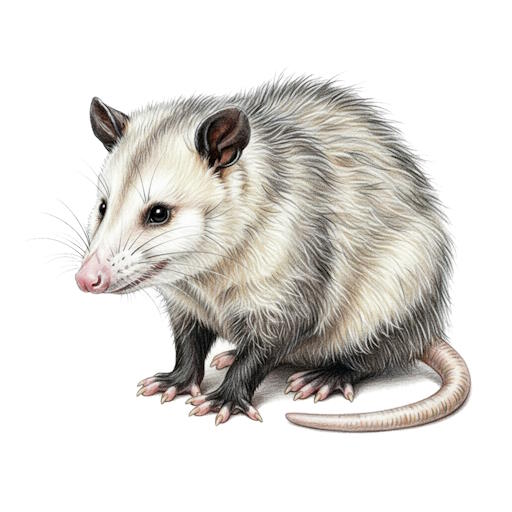
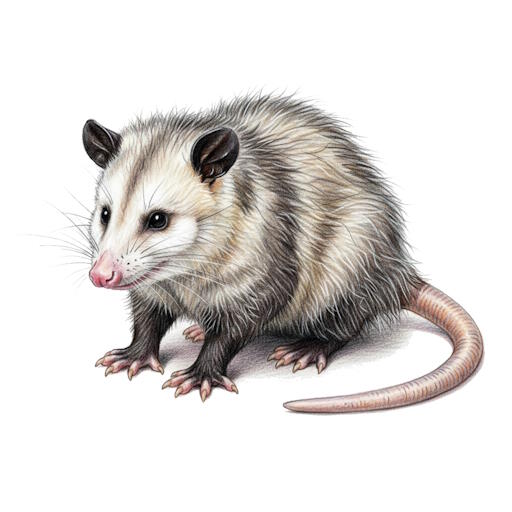
Animal Order: Didelphimorphia
The parent class for the order of Didelphimorphia is Mammalia.
The order Didelphimorphia, encompassing all species of opossums, represents a truly remarkable and unique lineage within the animal kingdom, particularly as a key representative of New World marsupials. What truly sets them apart is their incredible evolutionary resilience and adaptive versatility, allowing them to thrive across diverse habitats, from the forests of Canada to the jungles of Argentina.
One of the most defining characteristics of Didelphimorphia is their possession of a marsupium, or pouch, in which their altricial young complete their development. While a shared trait among marsupials, the unique array of reproductive strategies within opossums—from species with well-developed pouches to those with only rudimentary folds—highlights their diverse adaptations. Their highly generalized biology, often considered "living fossils" due to their ancient lineage, has allowed them to persist and diversify while many other groups have specialized themselves into extinction.
Beyond their reproductive distinctiveness, opossums exhibit a suite of fascinating anatomical and behavioral traits. Many species possess a prehensile tail, often used as a fifth limb for grasping branches, carrying nesting materials, or even hanging upside down. Their unique dental formula, featuring a large number of teeth (up to 50 in some species), reflects their omnivorous diet, enabling them to consume a vast range of foods including fruits, insects, small vertebrates, and carrion, making them crucial ecological generalists.
Furthermore, their famous "playing 'possum'" defensive behavior—an involuntary physiological response to extreme threat where they enter a catatonic state—is a truly unique adaptation. This feigning of death, often accompanied by foul-smelling secretions, deters many predators who prefer live prey. This remarkable survival strategy, combined with their robust immune systems (including a natural resistance to snake venom), underscores their evolutionary success. In essence, Didelphimorphia's blend of ancient traits, remarkable adaptability, and unique survival mechanisms makes them a captivating and invaluable group in the study of mammalian evolution and ecology.
Other Orders
There are many different orders based upon their class. To learn more about classification orders, click here.
Families within Didelphimorphia
Within the order of Didelphimorphia, there are one or more families of animals that share common characteristics and traits.
Each family represents a more specific grouping within the order, highlighting the diversity and specialization of species that have adapted to various ecological niches. Below is a list of families that fall under this order, showcasing the rich variety of life forms classified within this taxonomic category.
Animals in the order of Didelphimorphia
Click on an image to learn more about one of the animals.