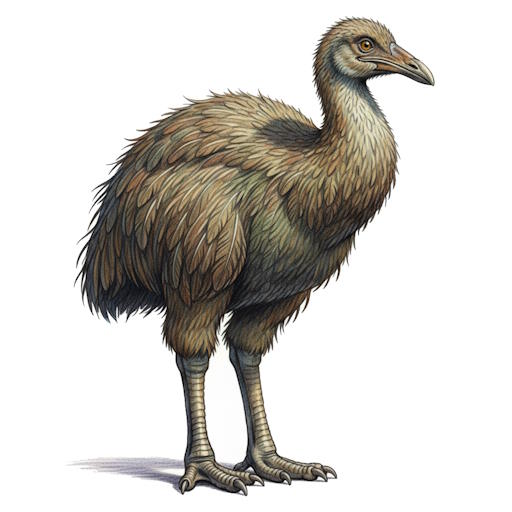
Animal Order: Dinornithiformes
The parent class for the order of Dinornithiformes is Aves (Avian).
The order Dinornithiformes, commonly known as moa, represents one of the most extraordinary and tragically extinct groups within the animal kingdom. Endemic to New Zealand, what truly made these flightless giants unique was their unparalleled evolutionary trajectory as the dominant terrestrial herbivores in an ecosystem devoid of native mammalian predators.
Moa were characterized by their immense size, with some species, like the South Island giant moa (Dinornis robustus), standing over 3.6 meters (12 feet) tall and weighing hundreds of kilograms, making them among the largest birds to have ever lived. Their skeletal structure reflected this gigantism, with robust leg bones and a unique sternum lacking a keel, a clear adaptation for a terrestrial, rather than aerial, existence. This loss of flight, a common theme in island evolution, allowed them to exploit the abundant plant resources of New Zealand's forests and grasslands without the energetic costs of flight.
Their uniqueness was further defined by their ecological role. Moa were the primary browsers and grazers, shaping the unique flora of New Zealand through their feeding habits, analogous to large mammalian herbivores in other parts of the world. Different moa species specialized in various diets, ranging from browsing on leaves and twigs to grazing on grasses, indicated by their diverse gizzard contents and beak morphologies. This dietary specialization, combined with their massive size, meant they had a profound impact on seed dispersal and vegetation structure.
Another remarkable aspect was their reproductive biology. Evidence suggests they laid large eggs, and parental care strategies likely varied among species. The eventual extinction of all moa species, primarily driven by human hunting and habitat loss after Polynesian settlement, underscores their vulnerability once external pressures disrupted their isolated, predator-free environment. Their disappearance also led to cascading ecological effects, including the extinction of their primary predator, the Haast's eagle.
In summary, the Dinornithiformes were a testament to convergent evolution, filling the niche of large herbivores in an island ecosystem through extreme gigantism and complete flightlessness. Their unique adaptations, ecological dominance, and eventual demise offer critical insights into evolutionary processes and the profound impact of human activity on biodiversity.
Other Orders
There are many different orders based upon their class. To learn more about classification orders, click here.
Families within Dinornithiformes
Within the order of Dinornithiformes, there are one or more families of animals that share common characteristics and traits.
Each family represents a more specific grouping within the order, highlighting the diversity and specialization of species that have adapted to various ecological niches. Below is a list of families that fall under this order, showcasing the rich variety of life forms classified within this taxonomic category.
Animals in the order of Dinornithiformes
Click on an image to learn more about one of the animals.