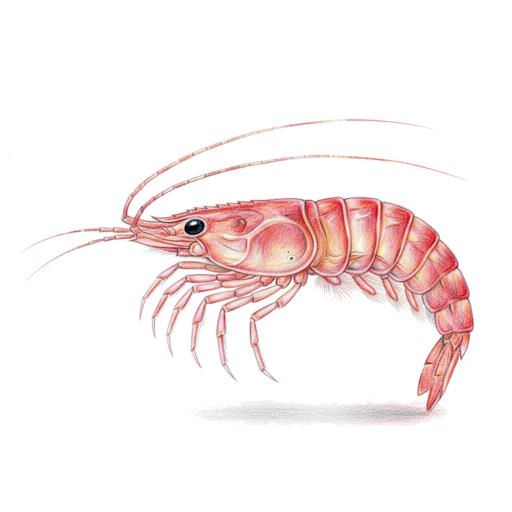
Animal Order: Euphausiacea
The parent class for the order of Euphausiacea is Malacostraca.
The order Euphausiacea to be one of the most ecologically vital and fascinating groups within the animal kingdom. Commonly known as krill, these small crustaceans are not merely shrimp-like creatures; they represent a cornerstone of marine ecosystems, particularly in polar and deep-sea environments. What truly makes Euphausiacea unique is their immense biomass, their critical role as a trophic link, and their remarkable bioluminescent capabilities.
The sheer abundance of krill is staggering. They form massive swarms that can stretch for kilometers, making them one of the most successful animal groups on Earth in terms of biomass. This incredible proliferation underpins the entire food web in many oceans, directly supporting baleen whales, seals, penguins, and numerous fish species. Without krill, the intricate balance of these ecosystems would collapse, highlighting their indispensable role in global marine productivity.
Beyond their quantitative significance, krill exhibit a unique physiological adaptation: bioluminescence. Many species possess photophores, light-emitting organs, which allow them to produce their own light. This bioluminescence is thought to serve various purposes, including camouflage (counter-illumination), schooling communication, predator avoidance, and even attracting mates. This intrinsic light production is a mesmerizing spectacle of the deep ocean and a testament to their evolutionary ingenuity.
Furthermore, krill are characterized by their specialized feeding structures. They possess a complex basket-like feeding apparatus formed by their thoracic legs, which is highly efficient at filtering phytoplankton and other small organic particles from the water. This efficient filter-feeding allows them to convert microscopic plant life into a readily available food source for larger marine animals, effectively transferring energy from the primary producers to higher trophic levels.
Their life cycle, often involving vertical migrations, also adds to their uniqueness. Many krill species undertake daily migrations, ascending to the surface at night to feed and descending to deeper, safer waters during the day to avoid visual predators. These coordinated movements are among the largest biomass migrations on the planet and demonstrate their sophisticated behavioral adaptations to oceanographic conditions.
In summary, the order Euphausiacea, or krill, stands out in the animal kingdom due to its unparalleled ecological importance as a primary food source, its astonishing biomass, its captivating bioluminescent abilities, and its specialized feeding and migratory behaviors. Studying krill provides invaluable insights into the health and dynamics of our planet's marine environments and underscores the profound impact of these small, yet mighty, crustaceans.
Other Orders
There are many different orders based upon their class. To learn more about classification orders, click here.
Families within Euphausiacea
Within the order of Euphausiacea, there are one or more families of animals that share common characteristics and traits.
Each family represents a more specific grouping within the order, highlighting the diversity and specialization of species that have adapted to various ecological niches. Below is a list of families that fall under this order, showcasing the rich variety of life forms classified within this taxonomic category.
Animals in the order of Euphausiacea
Click on an image to learn more about one of the animals.